Showing posts with label Expats. Show all posts

Thursday, May 22

Are these grapes sour, or are they simply replacing a tongue in the cheek?...........


From time to time one reads an account of and Expat's life in the Dordogne that is not all confit and foie gras, Pecharmant and Monbazillac. But when I came across this little report on the change in tendency aka slowing down of sales of beautiful old restorable Perigourdine homes to disenchanted Brits, I have to admit I was not sure of the intent of the author -- Perhaps it is just that I have always, and no doubt will always fail to grasp the sense of humour of my fellow-Brits........

You tell me what you think.....


From The Times, April 12, 2008
A Vendre : The British who turned the Dordogne into Dordogneshire are leaving for home


For sale: one French département, unexpectedly back on the market after having been occupied by the same nationality for 40 years. Offers incoming purchasers a chance to modernise to their own taste to create a marvellous ambience for family life.

Sale triggered by vendors facing credit crunch back in Britain, putting strain on finances, making it hard to raise mortgages for foreign property purchases, and thus forcing expatriate community to “retournons à nos moutons” (literally, “go home to Morden”). Compounded by frustration that the natives insist on speaking their own language; possibly because even after many decades of tourists addressing them in English, the locals are evidently a bit slow in picking up a foreign tongue - however loudly the English might speak.

Also disenchantment with the local menfolk parading along beaches in Speedos the size of a Post-It note; and German shepherd dogs guarding houses where the Jean-de-Florette-style owners don't even possess a full set of their own teeth, let alone valuables to tempt a burglar; and a nagging unease at taking children afflicted with swimming-related ear infections to be treated by French-style medicine (“Mais comment c'est possible, Monsieur le Docteur, qu'un suppositoire que vous voulez introduire dans la derrière de mon fils va améliorer un mal dans une oreille?”).

The Brits depart relieved that they will never again be embarrassingly caught out offering a double-cheek kiss to a native who kisses three times, or cheek-kissing three times with a diehard four-cheeker. Or be baffled by how much to tip, even though the bill says “service compris”.

Meanwhile, British males take home their regret that the local girls, always sniggering at their ankle-socks-with-sandals, never invited them to dabble in that legendary French cinq-à-sept pastime of “mouchoir-pouchoir” (or “hanky-panky”).

Like Samuel Johnson, Brits have decided that “what I gained by being in France was learning to be better satisfied with my own country.” So “à tout a l'heure” (or, “What a wake-up call!”).


Click on Link:

  • Chateau Lalinde : The perfect venue for your event

  • Relocation Orientation in France


  • Saturday, November 17

    A great new magazine in the Dordogne


    I recently came across a magazine - freely on offer on the counter of my little supermarket -- that I took home and read from cover to cover - finding the articles pertinent, well written and informative, and presented in a reader-friendly and attractive way.

    In a market already well-supplied with various how-to and setting-you-on-your-way publications, this one appealed to me. It contains just enough to take in in one go.

    Expats have no shortage of helpful publications, but often they are so packed with so much information that it is impossible to remember half of it -- let alone remember where to go look for it again when you need the information.

    "Impressions" has just enough of a variety of things, and with the clearly defined content, coming back to the correct copy which contains the specific information you will need some time in the future, should be a diddle.

    I decided to go look for the person behind this lovely little magazine, "Impressions".

    Jon Burton is the man, and he was ready to tell me more:

    A: Thank you for your kind words regarding Impressions magazine.
    The magazine was launched in April 2003 in the Deux Sèvres department of the Poitou
    - Charentes. Its aim was to help integration between the French and English speaking communities, promote local attractions and events and to promote both French and English speaking registered artisans. Impressions magazine carries both feature and general interest articles making it different to the likes of French News, Connexions and Sud Ouest which are predominately current affairs newspapers.

    Impressions magazine expanded rapidly in the Deux Sèvres and soon was being distributed in all departments of the Poitou Charentes. It now has a content of 28 pages, a readership of over 20,000 and carries 60+ advertisers.

    Q: So it is not a new magazine?

    A: No, in the Dordogne it is, but as a magazine it is already well established ---- In fact, it is now in its fifth year.

    Q: You say there are 60+ advertisers. Yet reading the magazine, one does not get that 'crowded' feeling with too many advertisements competing for space with the articles.

    A: That is good, because it really is a symbiotic relationship ---- the advertisers are not only important to us, but to the reader as well, as they are the people that make up the networking system of the expat in his new home. And of course, the magazine is wholly funded by advertising revenue, keeping it free to the reader ----- thus generating greater exposure for the advertiser. Impressions magazine also has a large subscriber base of readers who have the magazine delivered to their door throughout the world. Being a well-established magazine already, it has become a much relied upon and successful medium and has many advertisers who have been advertising from issue one including Century 21, AXA insurance and local Notaires.

    Q: Interesting, because it is not a very 'big' magazine.

    A: Yes, but we are confident we can replicate the success of the magazine here in the Dordogne and believe that Impressions magazine will be a good medium for businesses to advertise at a lower cost than other publications. --- Although Impressions magazine is starting as a 12 page magazine for the Dordogne edition, this is expected to increase in size rapidly.

    Q: Ah! I hope not too big -- because that is exactly what I found was unique about it and made it so attractive to me as the reader -- the 'digestible' size!

    A: And its availability, I hope! -----We are also pleased to announce that we have signed a partnership agreement with the Chambre de Commerce et Industry of Dordogne and the Bergerac Airport Authority. This will ensure that the magazine will be made available to a wider audience hence offering better coverage for advertisers.

    As well as being available in the Arrival and Departure Halls at Bergerac Airport, 3000 copies of Impressions magazine will be distributed in restaurants, bars, tabacs, banks, supermarkets, immobiliers, Office de Tourisme and insurance offices, initially throughout the areas of:- Riberac, Bergerac, Eymet, Lalinde, Monbazillac, Saint Foy and Mussidan.

    We wish Impressions much success in the Perigord Dordogne ---
    Look out for it wherever you are and have a look for yourself --
    and do let us know what you think about it!


    Click on Link:

  • Chateau Lalinde : The perfect venue for your event

  • Relocation Orientation in France


  • Wednesday, November 14

    November in France ; The true test for Sarkozy's strength as leader?


    As a supporter of a strong leadership for France in Sarkozy, I have, along with the rest of the population, been watching avidly what is to transpire this month in France. There are strikes looming of mammoth proportions -- strikes that will affect everyone, wherever they are in France. Tourism, that has enjoyed such a boom, will be badly affected. The news channels show little else than spot interviews with the citoyens in the streets, the flag and banner waving leftists, the wise old owls in the grands salons of the capitol -- the overall judgement seeming to be that Sarkozy has to stand strong and finish what he set out to do the day he stepped into the role as France's President.

    When one considers the radical changes his government announced, it is not surprising that, in a country where the people say what they think -- and be assured, they do think -- will take to the streets and voice their opinions -- albeit in the form of strikes and demonstrations. It is good that this happens -- it is good that there is a strong political awareness and a sense of freedom of speech, especially under an exceptionally strong leadership.

    So, it was just a matter of time for the strikes and the demonstrations to start.

    And yet -- as I said, we will all be affected -- and affected quite noticeably -- and where it hurts. The country's economy needs a push badly, and many of the changes put in action are exactly aimed to do that. But grinding the country's transport to a halt, will not only set back the timing schedule of the proposed changes and resulting improvements and growth, it could cripple the country to such an extent that the proposed changes may have to be put on the back burner for too long a time.

    The next month will be the deciding moment -- when the work force of France and their chosen leader come face to face in a battle of wills. The virtual - albeit temporary demise of the Socialists -- interesting that it is the Communist leaders' opinions that are now sought in radio and television debates --- and therefore the absence of their strong support to the strikers, could well be what swings the odds in favour of the president. However, my naive political idealism would hope that reason will truimph in the end and that it will be Sarkozy's strength of conviction that will persuade the union leaders and their rent-a-crowd followers that even if change is painful for the moment, the result will be to everyone's benefit.

    And as for the students that are planning to strike too? My advice to them is to grow up. A handful of people who are looking for personal fame are leading you by the nose -- because they know that can! Go attend your lectures, finish your studies and then take your place in the arena of the leaders of your country and there -- and only then -- you will make a difference in the world.

    On the Expatica site, Hannah Westley gives this comprehensive synopsis of what is de rigueur in France this November. (an extract)

    "Editor’s Diary - Black November

    So we’re in for a chaotic few days, perhaps even a few weeks, as the unions and the public sector flex their muscle in the face of President Sarkozy’s promised pension reforms.

    The indefinite strike will hit the national railway company SNCF starting Tuesday evening and the RATP, which runs Paris’ metros and buses, the following day. Union members at power and gas utilities also plan to join in. Meanwhile, student unions are rejecting plans to make universities more autonomous and are also joining the protests. Later in the month, millions of civil servants, including teachers, are set to go on strike on November 20 to oppose planned public-sector job cuts. Judges and courtroom staff will also go on strike on November 29 to protest against a reform of the judicial map of France.

    Many of us expats will bemoan the extra complications all this strike action entails: getting to work on time, if at all, the traffic, lack of parking spaces, weekends away that have to be cancelled. According to a poll published last week, a majority of the French will be complaining too: 69 per cent of the French are said to support the government’s strong stance.

    In an interview with Journal de Dimanche, Prime Minister François Fillon said the government’s latest proposals are non-negotiable: “In the past, we’ve presented reform projects that were too ambitious, and finally we relented and were left with only an illusion of reform… We no longer want that. We’ve presented a reasonable project. The status quo is no longer possible.”

    This week could be the real test of Sarkozy’s resolve and the political vultures are already watching and waiting. For those of you who have missed the fun, here’s what some of the press is saying:

    For the International Herald Tribune, Sarkozy is already putting his legacy on the line: “If he surrenders to strikers planning to bring France to a halt in the coming days and weeks, his reformist credentials may end up irrevocably damaged. If he holds firm against stubborn unions, he stands a chance of joining the ranks of Margaret Thatcher and Ronald Reagan as a leader who forced momentous change on a nation in bad need of an overhaul. Crucially, the reform-resistant French public may this time take Sarkozy’s side.”

    The Independent sees Sarkozy and his Prime Minister François Fillon playing out a bizarre soft cop-hard cop double-act: “President Sarkozy and his Prime Minister, M. Fillon has repeatedly stated that there can be no turning back, especially in the symbolic reduction of the special pension rights of railwaymen, power workers and other public sector employees. President Sarkozy, meanwhile, has tried to play the role of a more understanding fairy Godfather. He turned up at one of the most militant railway workshops in Paris and told the startled railwaymen that the cuts in pension rights would apply only to newly hired staff. This was more than even most of the eight railway unions had demanded. The government rapidly shunted the President’s words into a siding.

    For The Times, this is Sarkozy’s “Thatcher moment” as the strikes aim “to break his drive to purge France of its old economic ills.”


    Click on Link:

  • Chateau Lalinde : The perfect venue for your event

  • Relocation Orientation in France


  • Wednesday, October 31

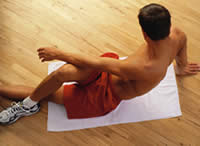
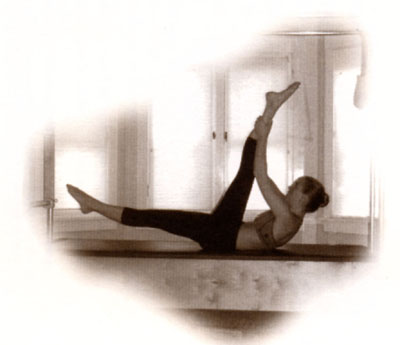
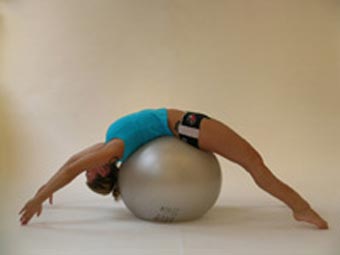
    Keeping fit and healthy in the Dordogne : From Pilates to Fencing


    If you are looking for an activity holiday or simply the most enjoyable and most efficient way to get and keep fit and healthy, there cannot be too many forms of exercise that fit the bill better than Pilates and Fencing - and especially when the instructors are as good -- and as charming as Robyn and Patrick!

    So, what exactly IS this Pilates phenomenon?

    It is an Exercise in Balance : "I must be right. Never an aspirin. Never injured a day in my life. The whole country, the whole world, should be doing my exercises. They'd be happier.", said Jo Pilates in 1965, at the age of 86.
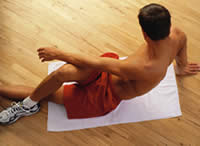
    Well, maybe not the whole world, but certainly much of it is experiencing the explosion in demand for Pilates, a method of exercise and physical movement designed to stretch, strengthen, and balance the body. With systematic practice of specific exercises coupled with focused breathing patterns, Pilates has proven itself invaluable not only as a fitness endeavour itself, but also as an important adjunct to professional sports training and physical rehabilitation of all kinds.

    Widely embraced among dancers for years, the exercises--"elephant," "swan", the language--"pull navel to spine, find the core connection! and breeaaaathe," and the look--bright-eyed, refreshed, buoyant-without-necessarily-sweating, is popping up in fitness classes, physical therapy offices, corporate retreats, luxury spas and wellness centers across the country. Another fad? A cult for the over-privileged? Think again. With the aging of our world population and the increasing trend toward mindful, moderate health practices, Pilates is more likely to find itself with a wait list at the YMCA, and in your local public schools--shaping the fitness ideals of our next generation. Practiced faithfully, Pilates yields numerous benefits. Increased lung capacity and circulation through deep, healthy breathing is a primary focus. Strength and flexibility, particularly of the abdomen and back muscles, coordination-both muscular and mental, are key components in an effective Pilates program. Posture, balance, and core strength are all heartily increased. Bone density and joint health improve, and many experience positive body awareness for the first time. Pilates teaches balance and control of the body, and that capacity spills over into other areas of one's life.
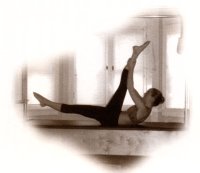
    If you are like myself - someone who hates aerobics with a passion, finds doing the circuit in gym beneficial and satisfying -- but utterly boring, but rrealises that a good form of exervice is absolutely crucial to keeping fit, supple and healthy, then look no further: the day you discover Pilates, a new world will open up for you!

    And now Pilates has come to the Dordogne as well! Robyn Haigh, from Lalinde,is a well established Pilates teacher in Lalinde as well as in Eymet and the larger Dordogne Perigord. She works both with groups and in one-on-one classes.


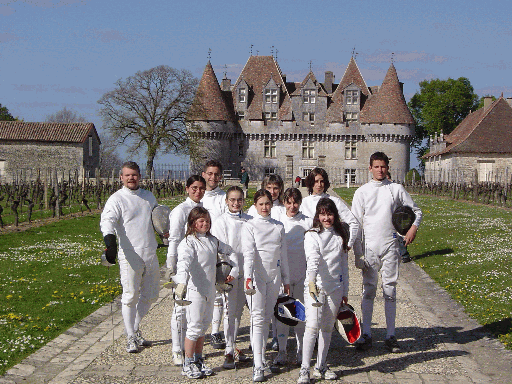
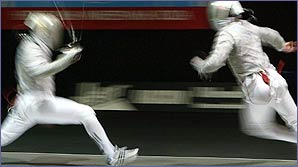
    And Fencing? Did that activity not go out with the Three Musketeers?
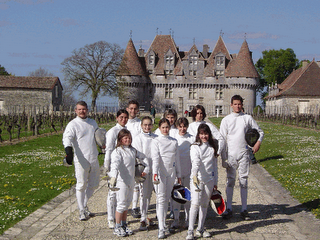
    No! Not at all! Fencing, or l'Escrime, became very popular again in France during the last few years -- especially after the 2004 Olympic Games when the French won the most gold medals for fencing.
    Fencing is a is a fantastic way to improve balance, co-ordination and flexibility - and it's great fun as well!

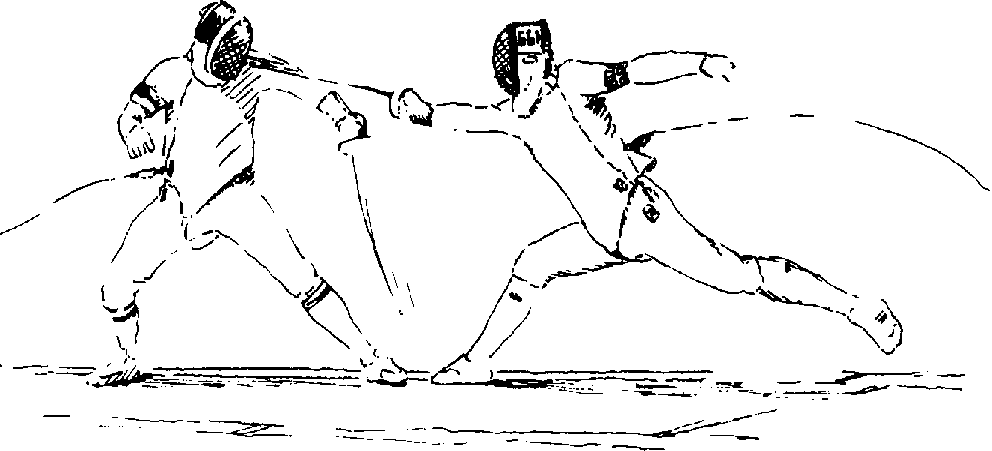
    There are three types of fencing - epee, foils and sabre.
    In all three, weapons are wired electronically to record when a hit is scored.
    In foils and epee, points can only be scored by the point of the weapon hitting. In the case of the foil, only a hit on the torso counts. In the epee, the whole body is the target. In sabre, points can also be scored by hitting the arms and head.
    As well as the three different types of sword, fencers also need protective clothing, including a wire mesh face guard.
    A metallic over jacket is also worn. This is placed over the scoring area and conducts electricity. Every time a valid hit is scored a lamp lights up on the scoring equipment.
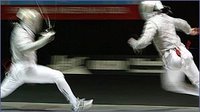
    Fencing originated as the practice of swordsmanship to prepare men for duels and warfare. A fencing match is depicted on an Egyptian temple that dates to about 1190 B.C. and the ancient Babylonians, Greeks, Persians, and Romans all had some form of fencing. The use of armour during the Middle Ages made swordsmanship virtually obsolete. The broadsword was used against armour, but only as a crude hacking device requiring sheer strength rather than skill. By making armour obsolete, the development of firearms ironically brought swordplay back into prominence during the 15th century. Soldiers once again had to acquire some skill with the sword, and fencing also emerged as a pastime for gentlemen. Fencing masters organized guilds, which taught various moves to initiates while protecting them as trade secrets from outsiders.


    Fencing as an exercise based on speed and skill began when the longer, lighter rapier was developed in Italy during the 16th century. Because of the rapier's length, opponents had to fight at a distance and quick but controlled lunges, attacking the enemy with the point of the sword, replaced cruder hacking techniques. But the rapier wasn't a good defensive weapon, so the fencer often had to use his gauntleted left hand to parry his opponent's thrusts.

    Under Louis XIV in France, a change in fashion led to a new kind of sword. The rapier simply didn't go well with brocaded jackets, breeches, and silk stockings, so French courtiers began wearing a shorter sword. The court sword, as it was known, turned out to be an excellent weapon for fencing because it was both lighter and stronger than the rapier, so it could be used for defense as well as offense. As a result, the modern one-handed fencing technique developed, with the left hand and arm used primarily for balance.
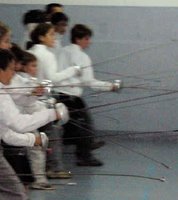

    A special version of the court sword, the foil, was developed for practice. Meanwhile, another type of sword, the colichemarde, had been created for duelling. The blade had a triangular cross-section, with slightly concave sides to reduce weight without reducing strength. The colichemarde evolved into the modern epee.

    The third of the fencing weapons, the saber, was introduced into Europe in the late 18th century as an adaptation of the Turkish scimitar, used by the Hungarian cavalry. It was so effective that other armies began using it and another variation, the cutlass, became a standard naval weapon.

    The saber was originally a very heavy, curved sword, but a lighter, more easily wielded weapon with only a slight bend was developed in Italy late in the 19th century for duelling and fencing. The modern fencing weapon is straight, like the foil and epee, but it still has one cutting edge which can be used to make hits on an opponent.
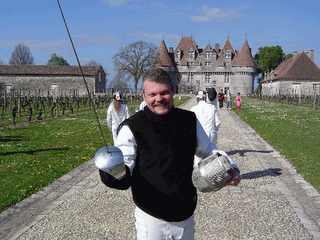
    Fencing is one of only four sports that have been on every modern Olympic program since 1896. The Fédération Internationale d'Escrime, founded in 1913 to standardize rules, is the governing body for international fencing, including the Olympics.

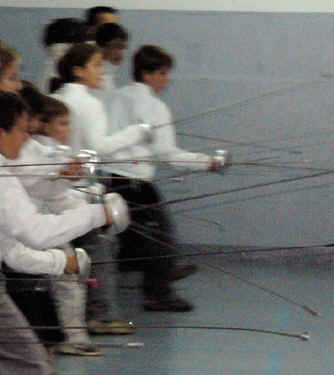
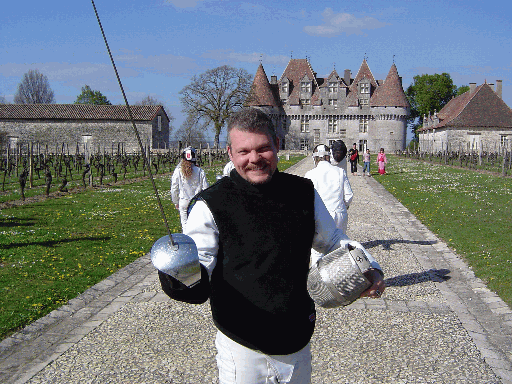
    There are fencing studios for anyone, from beginner to professional, in various centres in the Perigord -- the Cadets de Bergerac in Bergerac, of course!, with a studio in Eymet as well. To find out more and to find a class close to you, contact Patrick Wynn-Simmonds.
    Patrick is a sabreur(sabre fencer), and has received many wonderful medals and awards and acclaim at the Championnats de France and other European events.
    Last year he also became Champion d'Aquitaine (Vétéran V1 Individuelle) at Mont de Marsan at the Championnats de Ligue Vétéran, again at Epée --- and after beating the Maitre d'armes of Périgueux in the quarter finals, and his club president in the semi!
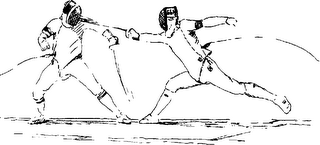


    Click on Link:
  • Fencing in Bergerac : Contact Patrick

  • Pilates Classes : Contact Robyn : 0553 633175


  • Click on Link:

  • Chateau Lalinde : The perfect venue for your event

  • Relocation Orientation in France

  • Francophiles living in France


  • Tuesday, October 30

    Hallowe'en in France


    Last year I wrote about the chrysanthenums that are so frowned upon by the local French when ignorant expats put them in their homes -- instead of on the graves in the cemeteries where they belong! This year another type of splash of colour has been catching my attention wherever I go -- the wonderful arrangements of pumpkins and gourds and autumn flowers! A veritable feast for the eye!


    Click on Link:

  • Chateau Lalinde : The perfect venue for your event

  • Relocation Orientation in France


  • Tuesday, October 16

    The stereotypical Frenchman no longer .........


    In a recent article in the Sydney Morning Herald, David Whitley tries to answer the perennial question of whether the French are rude or just misunderstood --- a question that was probably asked a lot more often before the English speaking hordes stormed France for the Rugby World Cup!

    For instance --- his opening paragraph had to have been written before the Australians and the British discovered the incredibly warm and helpful and hospitable French who welcomed them at every airport, train station and border post!:

    The search for the rude Frenchman: as enduring stereotypes go, it has got serious stamina. The typical Frenchman - lazy, arrogant and refusing to speak anything but his own language. Throw in a beret here and a Gallic shrug there and you've got a caricature that has stood the test of time.


    But credit to Mr. Whitley, he investigates the question well and shows both sides of the coin -- and comes to the conclusion that things have changed -- so only right that perceptions start changing too!

    It would be easy to dismiss it as just that, a grotesque exaggeration with little basis in reality, but when the country's president storms out of a European Union conference on hearing a fellow Frenchman talking in English, as happened in March last year, it bears scrutiny.

    The horror stories have been passed down for years - sneering waiters mocking requests to deviate from the menu, air traffic controllers going on strike during key holiday periods, hotel owners treating guests with total ambivalence, the whole country packing up and deserting their businesses during August.

    How much is truth, how much enhanced versions of the truth and how much myth is difficult to assess.

    There's only one way to find out and that's to throw yourself in as a completely befuddled tourist of the highest magnitude.

    You get some interesting insights when you're deliberately alternating between someone who speaks passable French, having a decent knowledge of the culture and history of the country, and a clueless wretch who speaks English only.

    In the first guise things are remarkably simple, with the only problems being personal embarrassment when the hotel receptionist spots a dodgy accent and replies to questions in English to help you both out. Everything is very civil, the assistance as unfailingly polite as you'd expect anywhere in the world.

    The bigger shock is that this largely continues when acting the stereotypical arrogant English speaker who hasn't even bothered to learn so much as "parlez-vous Anglais?" Asking for directions in the street, ordering in a cafe, booking a place to rest the head at night; there is always an attempt to help. Admittedly it's not always successful but the attitude is not one of rude refusal, simply non-comprehension.

    Much, it seems, depends on the approach. There is a world of difference between someone apologetically asking in English because they haven't got the language skills and someone marching in, expecting Johnny Foreigner to speak his language and jump at a click of the fingers. That's not French arrogance - quite the opposite.

    There are signs that the reputation is being acknowledged within France. New President Nicolas Sarkozy ruffled a few feathers last year when he said that, in order to compete on a world scale, the French were going to have to work harder, start speaking English and stop looking down at the rest of the world.

    "We should ask ourselves why the English buy our houses in the Dordogne ... The answer is simply because the British GDP is 10 per cent greater than the French and that the standard of life of the British is higher than that of the French," he said.

    "We have committed the immense error of undermining work. When someone who works does not have a better life than someone who does not work, why should he get up in the morning?" Ouch. That's not going to go down well, is it?

    You'd be surprised. The home truths, written in Sarkozy's recent book, weren't met with widespread outcry, much as the media would have liked them to be. There were no riots in the street, Sarkozy's standing was not harmed, and no one decided to go on strike.

    The ordinary Frenchman, it appears, can understand where the perceived attitude problem comes from. Alain Duprat, a student working behind a bar in the regional city of Besanon to earn extra cash, happens to speak very good English but realises why many of his countrymen don't.

    "It's not about not wanting to help but not being able to," he attempts to explain.

    "Many French people do not have good English because it has never been very important to do so."

    He's right. The prevalence of English as the international second language of choice is a fairly recent thing. Even 20 to 30 years ago French carried arguably as much import.

    In practice, for the Frenchman, it didn't really matter whether he spoke a second language or not because the person they were speaking to probably spoke a fair bit of French. It's the same excuse those in the English-speaking world use today - because we never really have to practise a second language, all that is learned quickly falls by the wayside.

    "Many French are not confident in their ability to speak English," Duprat adds, "so will only try when they see the other person is finding it hard."

    The tourism industry clearly realises the imperative to be multilingual. If you go to any attraction in Paris you will find guides and signposting not only in English but probably in Spanish, German and Japanese as well.

    Even on the trains, announcements are done in two languages for the benefit of passengers. That would be unthinkable in Sydney, New York or London.

    But the rude reputation is not just to do with language. What about the sneering, the belief that French is best? Well that, too, appears to be a myth. Requests for tomato sauce to go on a steak are met promptly without a tut or an exasperated gasp. Hoteliers not only show you to the room but give a brief guided tour of the entire premises, while any requests for directions are met with thorough briefings and wildly descriptive hand gestures.

    Striking up a conversation in a supposed English theme pub - everyone is sitting around sipping wine, so it doesn't really fit - one of the locals, Michel, has a theory.

    Half in pidgin English, half in scaled-back speaking-to-a-foreigner French, he explains a philosophy we don't often consider. "It's about respect. We believe that other people are intelligent and know what they are doing."

    It's a fair call. They don't help because they don't automatically assume you need it. This isn't rudeness, it's treating strangers with a high opinion. And you can see this whenever you walk into a shop. You'll never get the shark asking if they can help as soon as you step across the threshold.

    The expectation is that you know what you are looking for and want to be able to do so in your own time. When looked at from this perspective, French "rudeness" is mighty refreshing.

    In fact, it would be easy to wipe out all previous conceptions about the French character on a short trip to the country but it's comforting to know that at least some of the stereotype rings true.

    Sitting in the Gare du Nord, waiting to get on the Eurostar back to London, an announcement comes across the speaker system. "Passengers are advised that there will be no catering service on board today's Eurostar services. This is due to strike action by staff members.

    "We recommend that any refreshments are bought prior to boarding and we apologise for any inconvenience." Ah, some things never change, do they?


    .........Sounds like there are still a lot of people out there that need Relocation and Orientation courses in France!..............


    Click on Link:

  • Chateau Lalinde : The perfect venue for your event

  • Relocation Orientation in France


  • Friday, July 6

    France Bleu Radio comes to the Dordogne

    The delightful - and colourful! Eugène Lampion from France Bleu drove over from Libourne this morning to the Aquitaine Langues Language School to interview a motley crew of expats living in the area.

    Much laughter and fun was had by all as we waited our turn to be 'taken outside for grilling'. A bit like waiting for your turn in the oral exams at school, except none of my teachers or professors had quite the charm of this 'examiner'!

    Because he did not want any of us to know what the others were saying, each one was taken outside in the sunshine to be interviewed - and somehow the warmth of the sun struggling to get through the clouds did help with the fluency of thoughts and language. Afterwards -- should it have been before? - there was a table beautifully laid with every delicious bit of cheese and fruit and some special wine that Albert Croce, our French language guru, had brought back from his recent trip down to the south where he had presented a week's writing course.

    Sweden, the Caribbean, Taiwan, London, Scotland - from every part of the world they come to settle in beautiful Dordogne


    The interviews are short little 'portraits' of a few minutes each that will be broadcast on Friday afternoons on France Bleu at 17h40, each a small account of an expat who has come to settle in this area. It should make for very interesting listening!
    Click on Link:

  • Chateau Lalinde : The perfect venue for your event

  • Relocation Orientation in France

  • Aquitaine Langues Language School, Bergerac


  • Wednesday, May 23

    Canadians build a new resort in the Dordogne

    St. Emilion


    If you've always dreamed of owning a traditional property in rural France, but don't want to be isolated or get involved in renovation work, a new development in the Bordeaux region may be just the ticket.

    According to an article by Laura Latham in The Independent two days ago, you will now be able to invest in some stylish mock architecture in France. Close to the beautiful St Emilion, there is a pocket of rural charm -- a ruined 19thC manor house with its outbuilding, surrounded by farm land and vineyards, called the Domaine Haut-Gardegan. This will form the backdrop to a new village, which, though being built from scratch, is designed to look as though it has always been there.

    As well as a mix of flats and detached houses, the 12-acre estate will have cobbled streets, a village square with restaurant and bar, and shops run by independent local retailers. And the old stable block is being regenerated into a market place where you will be able to buy fresh produce, just as you would in any farmers' market.

    Will it be a Disney-esque attempt to capture the magic of Bordeaux?, asks Ms Latham. Well, it makes a refreshing change from the faceless new-builds in more developed locations – but it may come as little surprise that there is transatlantic involvement: the Canadian developer bought the site after the original owner failed in his attempt to turn it into a golf course, and though there will still be an 18-hole course, designed by the champion Tom Lehman, the main focus of the project is the village.
    "It will be built in the traditional mellow stone of the area, and according to strict planning laws. The original manor house at the centre of the development dates back to 1890, but burnt down in the 1950s and is now a shell. Nevertheless, the company decided to keep it as a focal point, and the structure help to preserve a sense of the history and character of the original estate. " The chateau will have some renovation, but it will be left as a ruin. Along with the open market and exhibition space, it will be the soul of the site".

    Not everything at Haut-Gardegan is as you would find in your average village, though. In addition to the golf course (which will be open to the public) there will be a spa, swimming pools, acres of formal gardens, a conference centre and a cookery school, all aimed at drawing visitors throughout the year. The company hopes to attract a top chef for the school, where residents and visitors can do classes.

    Property is priced from £205,000, which gives you a 42sq m, one-bedroom apartment with terrace and views over the countryside or golf course. At the upper end, a 98sq m three-bedroom penthouse apartment, with Jacuzzi on the terrace, starting at about €300,000, and when the villas are released, they'll be more expensive still. So, it's not cheap, but the proximity of sought-after St Emilion raises prices. Plus, residents will have access to on-site facilities, including concierge services.

    You may find that you're there more than you think – part of the beauty of owning in this area is that you can hop over with ease. It'sa 90-minute flight from the UK to Bordeaux; three hours from Paris via TGV."


    Click on Link:

  • Chateau Lalinde : The perfect venue for your event

  • Relocation Orientation in France


  • Friday, May 18

    Expat from Wales French Prime Minister's wife

    Pénélope Kathryn Fillon,(née Clarke) wife of the newly appointed Prime Minister of France, François Fillon, is only the second ever foreign-born to move into the Palais Matignon, the French equivalent of 10 Downing Street. The first was Eva Barre, the wife of Raymond Barre, who was Prime Minister from 1976 to 1981. She was Hungarian born.


    Penelope, or Penny, as she is known, was born 51 years ago in Llanover, close to Abergavenny in Wales. --- One has to wonder what it sounds like when the French try to pronounce these Welsh names!

    She married François Fillon in 1980, and together they have had five children, Marie, Charles, Antoine, Edouard et Arnaud - the latter having been born in 2001. Obviously a good match, as one of François Fillon's brothers, Pierre, later married Penny's sister, Jane!

    The French are quick to point out what an excellent French student Penelope was at school -- and "out of the ordinary student" they say, and whose French is excellent -- "although with a Welsh accent". That must sound quite lovely -- a gentle musical tilt to her perfect French from the green valleys of Wales.......

    The couple live in the Château de Beaucé, a sprawling 12th century manor house at Sablé sur Sarthe, near Le Mans, in western France.

    A local journalist, Florence Loyez, said: "Mme Fillon is a very natural and unpretentious woman. She's also very clever. I think she definitely has the intelligence and discretion to be a good 'second lady' of France. She'll advise her husband well."

    M. Fillon, 53, is a close associate of M. Sarkozy. He is a handsome, eloquent man, regarded as more consensual and somewhat less abrasive than Sarkozy. As minister for social affairs in the government of Jean-Pierre Raffarin from 2002-05, M. Fillon is credited with steering a significant and overdue reform of the French pensions system through parliament. After he was fired from the government (following the rejection of the EU constitution by the French people), M. Fillon said that his reform was the "only memorable achievement" of M. Raffarin's term of office. As M. Sarkozy's prime minister, he will run the day to day government of France and will be expected to guide a large package of economic and social reforms through parliament within 100 days.

    French prime ministers live and work at the Palais Matignon in Paris's seventh arrondissement, a once-aristocratic dwelling, larger than No 10 but much smaller than the President's Elysée Palace. The prime minister's wife and family do not always move into the Matignon but she is expected to be present for formal receptions.


    Click on Link:

  • Chateau Lalinde : The perfect venue for your event

  • Relocation Orientation in France


  • Sunday, May 13

    Americans in France

    In my recent article for the Expatica.com website, I made a few observations about why Americans go to Paris and the British come to the Dordogne. This article caused quite a storm in the big tea cup of the cyber world, and in that stormy process, I discovered a number of blogs and sites where similar issues are addressed.

    One such blog,
    Americans in France
    , writes in particular about the Americans in France. Although his statistics seem a little suspect -- they are vastly different from the official current numbers of 700 000 Brits and 165 000 Americans in France - of which 50 000 in Paris, and this always makes then wonder about the rest of the article, I did find it an interesting read. This is what he has to say:

    "Although your first thought might be that Americans in France would end up, for the most part, in the same areas of France as the Brits, this isn’t actually the case so funnily enough there is very little interaction between the two communities.

    Generally speaking, the Brits end up in Brittany/Normandy, Dordogne/Loire, and Provence with the Americans largely confined to Paris, though obviously there are a lot of exceptions to this.

    One of the more complete sites is Americans in France which seems to be a fairly complete reference guide for Americans aiming to move over here. Interestingly for me is that they still need to declare their income to the US tax authorities.

    Of interest to the parents amongst us is the list of bilingual schools. You might think that the list on the site “must” be too short. There are bound to be more bilingual schools in France, aren’t there? Well, there might be a few more but there aren’t an awful lot more which is something you may want to factor in when you’re considering where in France you might want to settle. If you don’t arrange bilingual teaching for your children from about age 11-18, they will not be fluent English speakers and that will set them at a major disadvantage in their future life.

    Not listed on the site are the international schools though there aren’t many of these either and bilingual is the way to go. International schools don’t raise children to fluency in both languages as you might expect.

    Anyway, lots to see on the site."


    Click on Link:

  • Chateau Lalinde : The perfect venue for your event

  • Relocation Orientation in France


  • Monday, May 7

    The aftermath of the French Presidential Elections : Chewing the Cud is a national pastime in France!

    Sarko fever? Not in St. Pompon, says Martin Vander Weyer in yesterday's Spectator.

    You can’t go much deeper into la France profonde than St Pompon, the village in a cleft of the hills between the Dordogne and the Lot to which I escape as often as I can. It’s a placid, unchanging, self-contained sort of place, a world of its own. I’d like to report that it was gripped by election fever this weekend – but if I did I’d be making it up.

    Interesting that Mr Vander Weyer should make this comment. Here I am in La France Profonde -- admittedly not quite as profonde as St Pompon -- but within a hand's reach of it, and I found just the opposite.

    No -- people were not out in the streets in their hordes with red roses or blue balloons, but they were all glued to their television sets at home in groups of family and friends and fellow supporters of either one or the other candidate.

    -- And the debating -- the endless, ceaseless, continuous (consult Thesaurus for any more adjectives in the same vein and insert) debating that preceded the election by months, continued, and no doubt will continue for another few months and on the night was creating a distinct hummmmmmmmmm throughout the Dordogne valley. I always wondered about the French' love for the debate. Someone mentioned recently that the reason there is so much debate on French television -- for the bulk of the French television programmes is made up of debates -- or at least -- people sitting around and talking -- was that it is such a cheap way to make television programmes. It is a bit of a chicken and egg situation -- did their love for debating come first and then the realisation that it was cheap television production, or did the television production budget result in them finding out how much they loved sitting around and debating?............

    But back to the elections.........I had commented before on attending political rallies in the area in the run-up to the elections. I was fascinated - and thrilled to be living in an area where the choice of the country's new president was weighing so heavily on everyone's mind. I am impressed that people take their leadership so seriously. In a world where elections and choice of government is more important than it has probably ever been in the history of mankind, this is sadly very seldom the case. We live in a world of apathy about our leadership. Oh yes! We like to complain -- and often vociferously -- after the horse has bolted, so to speak. But more often than not the biggest and loudest complainants are those who just could not be bothered to go cast their vote, because "What is my vote going to change? The stupid fool will get in anyway!"

    Coming from a country where the majority never had the vote until recently, and a continent where western democracy is not the norm, the ability to participate in the political process and have my voice heard when it comes to choosing our leaders, is no doubt something I appreciate far more than most of my fellow Westeners. I do not take the privilege to elect my government for granted -- ever! And yes -- it is a privilege, not a right, and if everyone remembered that, they would not take it for granted either.

    So -- when I found the interest everyone showed here in La France Profonde before and during and now, after the elections, I was, as I said, thrilled.

    I despair when I talk to people who do not take an active interest in their government -- local or national. Even when people take to the streets and riot and show that they care that way -- even that is better than apathy! However, here I am surrounded by people who take an active interest. So much so that now that the elections are over, the debate is starting all over again. On television, on radio and in every home and little coffee bar and bistro, people are talking about the results of the elections, who voted for whom, what Sarkozy had promised and what he is likely to do and not do, what he will do first and what he will leave till later, where he will go, who he will choose as his prime minister and in his government, what the background and the talents and the faults are of each of the possible members of his government, whether his wife, Cecilia Sarkozy will support him, what her dress sense is, what she should do with her hair, how Sarkozy will stand up to Bush and will he keep his promise to urge the USA to adhere to strict measurements to combat global warming, ---- the list goes on. A post-mortem like I have never seen before! A veritable fest of chewing the cud! And the relish and pleasure they are getting out of this, is as a direct result of the fact that they had actually cast their vote and participated in the political machine that is grinding away and know that their voice and their vote had made a difference. What a wonderful knowledge that is!

    Vander Weyer continues in his article : "Fortunately, however, the local Sud Ouest newspaper prints the results not just district by district, but commune by commune, so I now have a better idea which way the political breeze was really blowing down this narrow wooded valley 350 miles south of Paris. St Pompon mustered a turnout of almost 90 per cent, and voted 148 for Sarko against 141 for Ségo. That was against the run of play in our district, Domme, whose 5,000-odd voters inclined 52 to 48 for the socialist candidate – having given 8 per cent to Le Pen in the first round. To the extent that these detailed results offer any pattern, it is that the communes in which agriculture predominates were generally the strongest for Ségo, while those more dependent on commerce and tourism (led by the lovely hilltop bastide of Domme itself) tended towards Sarko. St Pompon, whose micro-economy is a mixture of the two, was bang in the middle."

    As another very astute article by Simon Heffer points out: "...the majority of French are bought off with a lavish welfare state and jobs on the public payroll, financed by a minority who pay high taxes for the privilege of living in France. Business has had enough of bankrolling bureaucracy and funding feather-bedding." Choosing Sarkozy meant that France has chosen to finally move out of the 1940s, rather than to stay there to the point of utter economic destruction. The three great economic difficulties facing France are chomage, or unemployment, the absence of croissance, or growth and the weakness of pouvoir d'achat, or purchasing power.
    Wages for most workers, especially in France's vast rural communities are low. "The bargain prices British tourists feel they have spotted when they buy food and wine, or pay for a meal in a restaurant, are quite often out of the reach of the average French family. The income tax threshold is high, and therefore only 48 per cent of those in work pay any.
    By contrast, there are huge imposts on employing someone - and, once employed, staff are almost impossible to sack - which is part of the reason it is so hard for young people to get work, and why there is such high unemployment. It is also why so many dynamic young French people now choose to come to live and work in London, now the seventh biggest French city in the world."

    " In some parts of France the signs of decay are becoming ever more obvious: shops boarded up in villages in the Dordogne, property not selling except perhaps to foreigners, and resentment about freeloaders, especially if they are perceived to be immigrants. France has numerous successful multinationals, and every French town has scores of one-man bands (notably retailers), but there is less and less in between.

    The other factor that makes it so hard for energetic and enterprising French people to prosper is that they are usually prevented by law from working more than 35 hours a week. This law, brought in under the socialist government of Lionel Jospin, is now widely condemned, even by some supporters of Miss Royal, for the effect it has had on suppressing growth, living standards, wealth creation and productivity.

    That Mr Sarkozy has said that he will not only scrap it, but will make the earnings for work done in excess of the 35 hours free of taxes both for the employee and the employer, is indicative of the hand grenade he intends to throw into the dormant French economy.


    Vander Weyer concludes with this remark, which I have observed as well: "If there is any conclusion to be reached at all from this exercise it is, I suspect, that what rural France really wants is a mixture of socialist subsidy and welfare with rightist social and immigration policies; but most of all what it wants is to be left in peace and privacy, not to be told what to do, and not to be asked too many questions."
    ........ not to be told what to do and not to be asked too many questions, no, but do give your opinion and start a discussion going, though --- they do love that with a passion -- and no time like elections time for those kind of passionate discussing and debating!


    Click on Link:

  • Chateau Lalinde : The perfect venue for your event

  • Relocation Orientation in France


  • Monday, April 30

    Expats in : Fes, Morocco : The Good Life

    I have just had the most glorious week in Fes, Morocco, visiting my friends' Sandy and Suzanna's Riad Zany, an ancient riad which they are renovating with incredible patience, careful adherence to the original and traditional techniques and meticulous attention to detail.

    Riad Zany's courtyard, before and after renovation


    On the first night of my stay a huge surprise awaited me : A special evening of traditional music was arranged in my honour to celebrate my birthday! All afternoon the riad was brought into readiness, with chairs for 70 guests arranged around the courtyard, plastic sheets stretched over the open roof in case of rain, caterers coming in with delicious food and bunches of mint for the tea, while a few of the musicians practised for the performance, filling the space with their hauntingly beautiful music. I picked a few lemons off the tree under which we were sitting and offered freshly squeezed lemon juice with ice cubes to soothe the hard-working voices and Ben Ali, the base player, presented me with a signed copy of his latest anthology of love poetry, and translating the Darija -- Moroccan Arabic -- of a couple of the exquisite poems for me. At about 8pm a couple of helpers went down to the nearest medina gate to guide the guests through the maze of narrow alleys to the riad and slowly the court yard filled with the excited buzz of the guests. The performance was opened by the angelic singing of Anas and then followed by five different kinds of traditional Moroccan music performed by 12 musicians, amongst them the grand masters in their individual genres.The evening was a brilliant success and the guests seemed reluctant to finally leave -- but everyone in agreement that this was an evening of exceptional quality and that they would love for similar events to be repeated again and again.


    My birthday treats continued day after day with watching the sun set over the medina whilst sipping champagne on the roof terrace of Riad Laaroussa, the stunningly beautifully restored riad of Frédéric Sola (but more about this lovely man's creative and bold spirit later...), a demonstration of my 'sabrage' techniques to the nervous horror of the spectators, unforgettable meals at Thami's, a little one table!-cafe near the Bab Boujeloud (the blue gate to the medina)where you may share the meal with anyone else who happens to come along and join you at the table -- such as Radek, the handsome young intrepid traveller from Poland, Kate and Wayne from New Zealand -- who had just travelled 8 hours through the desert, Louis - originally from Norwich but now proud owner and restorer of one of the most unique homes in the medina, Barbara - who aims to make Fes the venue for the most exotic weddings on offer, David - the master of master restorers......and the list goes on...., walking through the medina revelling in the sounds, colours, smells......
    I cannot wait to get back!


    Click on Link:

  • Chateau Lalinde : The perfect venue for your event

  • Relocation Orientation Courses


  • Related Posts Plugin for WordPress, Blogger...