Showing posts with label Wine. Show all posts

Sunday, August 10

Chateau Thibeaud-Maillet: A Pomerol of distinction: The wine for the person who knows what is best....


At the annual Lalinde wine fair last weekend, 9-10 August, there was once again a vast choice for the wine lover. Wine growers from all over France come to set their ines out on tables, the lush plane trees of the square next to the canal bassin forming a dappled green umbrella and providing shade from the beautiful hot weather we have been enjoying.
My special pleasure is always seeking out the most charming of wine-making couples, M. et Mme Roger Duroux from the Thibeaud Maillet Chateau near St Emilion. Their Pomerol must be one of the most delicious -- no need to go spend a small ransom on a Petrus or a La Tour -- the Chateau Thibeaud has a long tradition of being constant and reliable as an excellent Pomerol.


Chateau Thibeaud Maillet is one of the "Vignerons Independants d'Aquitaine", a Pomerol vineyard close to St Emilion in the Libournais.

The chateau Thibeaud-Maillet truly deserves mention as its quality/price balance is most interesting to the wine conoisseur. In fact, a Pomerol of this excellent quality still obtainable at under €30, is something one should rather keep a well-guarded secret! "Robe grenat profond , ce vin a de l'allure et à peine débouché son arôme titille agréablement les narines de l'oenologue averti!"
The aroma of red fruits but without the acidity, a hint of spices such as cinnamon, it has a fullness on the tongue but stays light. There is no after-taste of tannin as one often finds in some of the great Medoc wines, but it retains the elegant nextar quality of the best of the St Emilion wines.
The Pomeral region consists of about 700 hectares of Pomeral vineyards and on each corner a chateau, of which Thibeaud Maillet is one.
Founded at the beginning of the 19th century by the Thibeaud family, the estate has been successfully run by the family in the small vinyard tradition of always offering only the best that their 2 hectares can produce. The estate sits on a plateau with a slight eastern slant and the soil is characterised by its sandy gravelly texture, ideal for a very good maturing of the grape.
But more important almost than any of this are the people who produce the wines: the Duroux couple is the epitomy of elegance and charm, knowledgeable and enthusiastic about their wines and always ready to engage in a fascinating discussion about any subject that you may wish to raise.
Treat yourself and go visit their chateau -- not only will you meet the most delightfl people, but they will also show you around their family estate and let you taste their superb wines!

The Chateau Thibeaud-Maillet estate is open to the public, by appointment from Monday to Saturday, 09h00 to 20h00 and on Sunday from 11h00 to 18h00.
English and German is spoken. Wines are for sale directly to the public.
CHATEAU THIBEAUD MAILLET
33500 - POMEROL
Tél : 05 57 51 82 68
Fax : 05 57 51 58 43
E-mail : oga.richardot@orange.fr


According to the Cellar Notes site, Pomerol is the smallest of the great appellations in Bordeaux. Red wines make up almost all the production. Merlot is the dominant grape in Pomerol (as it is in St. Emilion) and the wines from this area often contain 80% or more of that variety.
The Pomerol wine can be more robust than others in Bordeaux. They have an exclusive velvety quality. Pomerol is at its very best when the bottle reaches the age of 15 -- so do not be in a hurry to open that bottle!
Cépage : 85 % merlot ; 15% cabernet franc
The Merlot variety produces wines in Pomerol that are soft, full of fruit and rich in flavor. Even though the Merlot grape produces wonderful wines in this Pomerol, the real reason that it is grown here is that frosts arrive earlier in this region than in the Medoc. Merlot ripens earlier than Cabernet Sauvignon and is much more likely to produce a mature crop. The second, most used grape in Pomerol is Cabernet Franc. Pomerol estates tend to be much smaller than their counterparts in the Medoc region. There are only about 1800 acres of vineyards in Pomerol.
These vineyards are spread among the roughly 150 estates that produce an average of 1000 to 4000 cases each. In the Medoc region, the estates are generally much larger with production in the 10,000 to 20,000 case range for most of the estates. There has never been an official classification of the chateaux of Pomerol. Even without an official classification, there are several properties that have distinguished themselves based on the consistent quality they have achieved over many years.
The soils of Pomerol range from a gravel and clay mixture found in the eastern part of the commune to a lighter soil with more sand in the west. The Plateau of Pomerol is a gravel deposit on the east side of Pomerol where most of the famous and well known chateaux are located. Within this gravel deposit you will find clay in quantities that range from a mixture with the gravel to actual pockets of almost pure clay. The most famous chateau of Pomerol is Chateau Petrus. Petrus is located on one of the pockets of clay on the plateau. The wines from the plateau are fuller, richer and generally better than those from the sandy area to the west.

Another site The Winedancer adds a bit more information:
History
Pomerol's history goes back a long way. The plateau was crossed by two Roman road's, one of which was used by the poet Ausonius to go to his villa, Lucaniac. In the 12th century, the hospitallers of Saint John of Jerusalem established their first commandery in the Libourne as well as a hospice, or special stopping place for pelgrims on their way to Santiago de Compostela. The vineyards were distroyed during the Hundred Years' War, replanted in the 15th and 16th centuries, and have been famous for quality ever since the latter half of the 19th century.
Soil
Soil in Pomerol is a unique, outstanding geological phenomenon. The topsoil is made up of gravel that varies in compactness, with layers of clay and sand. The subsoil includes iron oxide, locally called "crasse de fer". This soil, combined with a special micro-climate, accounts for Pomerol's absolutely inimitable personality.
Vineyards
Though it is tiny, Pomerol is famous world over. The vineyards are located 30 kms north-east of Bordeaux and 3 kms from the city of Libourne on a slightly rolling plateau, that slopes gradually towards the Isle river valley and its confluence with the Dordogne. It is bordered by Barbanne stream to the north, Saint Emilion to the east, and Libourne to the south and east. This is one of the tiniest vineyards in Bordeaux: 4 kms long and 3 kms wide, 780 hectares of vines that produce an average of 28,000 hectolitres, or the equivalent of 4 million bottles of wine a year. Merlot accounts for 80% of vines planted, withthe remainder devided between Bouchet or Cabernet Franc (15%) and Cabernet Sauvignon (5%). These vines attain perfection in such a special soil.
Quality
Pomerol wine is true work of art, owing to be happy blend of the mild Aquitaine climate, privileged location, and local winemaking know-how. There are a great number of wine chateaux, and many winegrowers cultivate quite a small area (sometimes less than one hectare) with as much love and care as the owners of prestigious growths whose names are known all over the world. Patience, determination, hard work and science have given Pomerol its reputation as one of the finest wines in the world. The excellent homogeneous quality means that Pomerol has no official classification, which helps to maintain good relations and cooperation between producers.
Pomerol's charm is immediate, and appeals as much to the most demanding connoisseur as to the person just learning to enjoy wine. Fine colour, power and an elegant bouquet combine to produce velvety wines with subtle aromas of berries, violets and truffles. Pomerol wines are deeply coloured and admirably structured, with remarkable elegance and a taste that is both rich and generous. Pomerol is even delicious young, though it reaches perfection after 5-10 years in bottle, depending on the chateau and wine storage conditions.
How to appreciate
As with all great wines, there are a few basic guidelines: handle the bottle with care and bring it up to room temperature (16-18 C) over a 24 hour period. Do not hesitate to decant the wine. either to seperate it from the sediment that is always present in old wines, or let a young wine breathe and develop its bouquet. Pomerol is an ideal accompaniment to almost any food, and is particulary fine with red meat, game and cheese.
Apart from Chateau Thibeaud Maillet, here are a few of the Pomeral greats:
Chateau Petrus
Vieux-Chateau-Certan
Chateau Petit-Village
La Tour a Pomerol
Chateau Trotanoy
Certan-de-May
Chateau La Conseillante
Le Pin
Chateau Lafleur
Cateau Lafleur-Petrus
Chateau Gazin
Chateau l'Evangile
Clos L'Eglise
Chateau Plince

So, to sum up -- this is what you need to impress when next you are at a diner table:

Pomerol wine information:
Appellation: Appellation Pomerol Controlée
no ranking in Pomerol!
Location: Along the Isle river
Places: Pomerol, Libourne, etc
Soil: Very diverse from gravels to clay (in Pétrus)
Size: 800 ha
less than 2,000 acres
Production: 5.3 million bottles
Strictly reserved to red wine
Grapes: Merlot, Cabernet Franc, Cabernet Sauvignon and Malbec
Type of wine: Full-body red wine
Strong bouquet
Age: More than 10 years and up to 20 years
15 years is the optimum for a Pomerol
Vintages:
(recommended) 2005, 2003, 2000, 1998, 1995, 1990, 1989
Aromas: Well-ripen red fruits, Licorice, Dried fruits
Pomerol Wine and Food:
Game
Partridge
Veal
Roasted turkey
Pears in wine
Pomerol Wine and Cheese:
Cantal, Comté, Maroilles, Ossau-Iraty. Saint-Nectaire, Langres


Click on Link:

  • Chateau Lalinde : The perfect venue for your event

  • Relocation Orientation in France


  • Friday, January 25

    No better area in France for wine tasting holidays than the Aquitaine


    According to the Aquitaine site, it is clear that one cannot do better than this area for the best wine tasting holidays and Wine Tourism than this province of France.

    In each of the fourteen winegrowing areas in Aquitaine,,wine,region,aquitaine,france.html tourism and wine professionals have undertaken a quality procedure. Each service provider who is a member of ‘Destination Vignobles’ acts as a tourism ambassador with the aim of showing holidaymakers the winegrowing territories of Aquitaine.


    The list of members and practical information are available from the information relay points presented below.

    Take advantage of the commitment of our tourism and wine professionals to enjoy a truly prodigious stay in Aquitaine.


    • To come and share the passion of the growers and taste their wines. « Destination Vignobles » has listed over 1,000 wineries and encompasses top quality brands present in the various areas.

    • To benefit from accommodation with the hallmark of charm.

    • To tour Aquitaine from village to vines, on foot, on a bicycle, on horseback.…

    • To enjoy the friendliness of the population and to take part in the very colourful local festivities.

    Their commitments:

    The members of « Destination Vignobles » have signed a charter of commitments. You will always be welcomed as a very special guest and each and every member will be your special ambassador to guide you in your exploration of the wine-growing areas of Aquitaine.

    Each and every member has chosen to meet a certain number of criteria which form the basis of the quality of service and reception:
    • Observance of opening hours and periods,
    • Information on the languages spoken,
    • Outstanding conditions for visits, wine-tasting, accommodation and food,
    • Availability of tourist information, whereby each member is your key to exploring the area concerned, and also,
    • Easy access, and parking facilities,
    • Spotless condition of all the premises,
    • Price display,
    • Respect for the environment,
    • Inspection by an independent agency,
    • All the commitments already included in their respective professional charters.

    For you, « Destination Vignobles » is a guarantee of quality and confidence. You will easily recognise a listed place by its logo.

    Our networks partners : Vignobles et Chais en Bordelais, the Bergerac Wines Route, the Jurançon Wines Route, Gîtes de France, Clévacances, Logis de France.


    The fourteen areas:

    The numbers mentionned before the territories are there to help you locate them on the map below...


    BORDEAUX
    The gateway to the prestigious wine region, Bordeaux is a city included on the UNESCO World Heritage list since june 2007, to be "tasted" on foot, along its 18th-century quaysides or in the pedestrian streets of the centre. Museums, opera house, welcoming café terraces... and the starting point for a wide variety of excursions to the famous Bordeaux châteaux.
    >> contact: Office de Tourisme de Bordeaux
    12 Cours du XXX juillet
    33000 Bordeaux
    Tel.: +33 (0)5 56 00 66 00
    otb@bordeaux-tourisme.com
    www.bordeaux-tourisme.com
    Guided tours around the vineyards all year long.

    1. BERGERAC The Récollets cloister, set amidst the magnificent half-timbered houses and home to the Bergerac House of Wines, is a superb example of 17th century architecture.
    >> contact: Office de Tourisme de Bergerac Pourpre
    97 rue Neuve d’Argenson
    24100 Bergerac
    Tel.: +33 (0)5 53 57 03 11
    tourisme-bergerac@aquinet.tm.fr
    www.bergerac-tourisme.com

    2. BUZET EN ALBRET This region of châteaux on the border between the Landes and the Gers, much appreciated by the French King Henry IV, is best discovered from the unspoilt and navigable Baïse river.
    >> contact: Office de Tourisme du Pays d’Albret
    7 avenue de Mondenard
    47600 Nérac
    Tel.: +33 (0)5 53 65 27 75
    accueil@albret-tourisme.com
    www.albret-tourisme.com

    3. CHALOSSE TURSAN This historical region of Gascony, nestled between the Adour river and the mountain streams, is home to many picturesque walled towns and the 1st « slim-line » village of Eugénie-les-Bains!
    >> contact: Office de Tourisme d’Aire-sur-l’Adour
    Place du Général de Gaulle - BP 155
    40800 Aire-sur-l’Adour
    Tel.: +33 (0)5 58 71 64 70
    otsi.aire@wanadoo.fr
    www.aire-sur-adour.org

    4. DURAS A region of gently rolling hills and charming villages, dominated by the fortress town of Duras and its magnificent castle.
    >> contact: Maison du Vin de Duras
    BP 13 – Fonratière
    47120 Duras
    Tel.: +33 (0)5 53 94 13 48
    contact@cotesdeduras.com
    www.cotesdeduras.com

    >> Office de Tourisme du Pays de Duras
    Tel.: +33 (0)5 53 93 71 18
    contact@paysdeduras.com
    www.paysdeduras.com

    5. ENTRE-DEUX-MERS The Entre-Deux-Mers, famous for its wines, is also well known for its very rich architectural heritage, with abbeys, walled towns, mediaeval cities, not forgetting the « bicycle resort » of Créon!
    >> contact: Office de Tourisme de l’Entre-deux-Mers
    4 rue Issartier 33580 Monségur
    Tel.: +33 (0)5 56 61 82 73
    info@entredeuxmers.com
    www.entredeuxmers.com

    6. GRAVES SAUTERNES This area immediately brings to mind wines now famous throughout the world and must-see historic châteaux such as the Château of La Brède where Montesquieu was born.
    >> contact: Office de Tourisme du Sauternais, Graves et Pays de Langon
    11 allées Jean Jaurès
    33210 Langon
    Tel.: +33 (0)5 56 63 68 00
    langon@sauternais-graves-langon.com
    www.sauternais-graves-langon.com
    Tourist Map of the Sauternes, Graves and Pays de Langon areas.

    >> Office de Tourisme de Montesquieu
    3 place Marcel Veyssière
    33650 Martillac
    Tel.: +33 (0)5 56 78 47 72
    info@otmontesquieu.com
    www.otmontesquieu.com

    7. HAUTE GIRONDE This area, stretching along the Gironde estuary, is overlooked by two remarkable citadels at Blaye and Bourg-sur-Gironde.
    >> contact: Office de Tourisme de Bourg-sur-Gironde
    Tel.: +33 (0)5 57 68 31 76
    tourismebourg@wanadoo.fr
    www.pays-hautegironde.fr

    >> Office de Tourisme du canton de Blaye
    Tel.: +33 (0)5 57 42 12 09
    officedetourisme.blaye@wanadoo.fr
    www.tourisme-blaye.com

    >> Syndicat Mixte du pays de la Haute Gironde
    32 rue des Maçons - BP 14
    33391 Blaye Cedex
    Tel.: +33 (0)5 57 42 68 90
    tourisme-payshautegironde@wanadoo.fr

    >> Office de Tourisme de Saint-André-de-Cubzac
    Tel.: +33 (0)5 57 43 64 80
    ot.cubzaguais@wanadoo.fr
    www.saint-andre-de-cubzac.com

    8. IROULEGUY The region of Irouléguy, between Saint-Etiennede Baïgorry and Saint-Jean-Pied-de-Port along the route to Santiago de Compostela, is home to a variety of typical Basque villages.
    >> contact: Office de Tourisme de Saint-Jean-Pied-de-Port
    14 place du Général De Gaulle
    64220 Saint-Jean-Pied-de-Port
    Tel.: +33 (0)5 59 37 03 57
    saint.jean.pied.de.port@wanadoo.fr
    www.terre-basque.com

    9. JURANÇON The Jurançon area, with its steep, sun-kissed hillsides, is the ideal place for hiking, riding and cycling … or even for a leisurely drive along the Jurançon wines route.
    >> contact: Route des Vins de Jurançon
    La Commanderie du Jurançon
    64360 Lacommande
    Tel.: +33 (0)5 59 82 70 30
    contact@vins-jurancon.fr
    www.vins-jurancon.fr
    Guidebook: "La route des vins du Jurançon"

    >> Office de Tourisme du Pays de Lacq – Cœur de Béarn
    58 rue du Commerce
    64360 Monein
    Tél. : +33 (0)5 59 12 30 40
    contact@coeurdebearn.com
    www.coeurdebearn.com

    10. MADIRAN This history of this region bears the hallmark of the many mediaeval châteaux and fortresses. Do not forget to visit the castle of Montaner, defended by the famous Gaston Fébus.
    >> contact: Office de Tourisme de Vic-Bilh Montanérès
    38, place du Marché
    64350 Lembeye
    Tel.: +33 (0)5 59 68 28 78
    infovicbilh@free.fr
    www.tourisme-vicbilh.fr
    Guidebook: " Route des chais et Châteaux du Madiran et du Pacherenc du Vic-Bilh"

    11. MARMANDAIS The area around Marmande, made up of hillsides and market gardens, is a paradise en earth for strawberries, asparagus and tomatoes.
    >> contact: Office de Tourisme du Val de Garonne
    Maison du Développement
    Place du Marché BP 305
    47200 Marmande
    Tel.: +33 (0)5 53 64 24 21
    marmande@valdegaronne.com
    www.valdegaronne.com

    12. MÉDOC A drive along its famous châteaux route will enable you to discover the mythical great growths and famous châteaux of this flagship of Aquitaine’s wine-growing regions.
    >> contact: Maison du Tourisme et du Vin de Pauillac
    La Verrerie
    33250 Pauillac
    Tel.: +33 (0)5 56 59 03 08
    mtvp@wanadoo.fr
    www.pauillac-medoc.com
    See also their blog: http://destination-vignobles-en-medoc.blogspot.com
    Guidebook: "Pauillac, l’Escale au Pays des Grands crus" (F/GB/D) et "Destination Vignobles en Médoc" (FR/GB).

    13. PAYS DU LIBOURNAIS
    It is impossible to visit the Libourne area with visiting the wine-growing landscapes of the jurisdiction of Saint-Emilion, a site now listed as part of UNESCO’s world heritage for humanity.
    >> contact: Office de Tourisme de Saint-Emilion
    Place des Créneaux, Le Doyenné
    33330 Saint-Emilion
    Tél. : +33 (0)5 57 55 28 28
    st-emilion.tourisme@wanadoo.fr
    www.saint-emilion-tourisme.com
    Saint Emilion practical guide : list of wine cellars open to the public (FR/GB/D/SP/I/Jap).
    Organization of guided tour in the wine estate

    >> Office de Tourisme de Libourne
    Tel.: +33 (0)5 57 51 15 04
    officedetourismelibourne@wanadoo.fr
    www.libourne-tourisme.com


    Looking for accommodation in the Aquitaine? Look no further:
  • An idyllic stay in a French chateau on the banks of the Dordogne River

  • A beautiful apartment in an historic stone building centrally located in Bordeaux


  • Click on Link:

  • Chateau Lalinde : The perfect venue for your event

  • Relocation Orientation in France


  • Monday, November 12

    Lillet -- another (delicious) surprise from Bordeaux


    Bordeaux is not only famous for the fact that it is a World Heritage Site, or that it is at the heart of the best wine-growing area of the world, or where the best wines are produced and the at the core of wine tourism. It is also the home of one of the most delicious aperitifs -- a specialty of this region -- Lillet.

    Paul and Raymond Lillet, distillers and merchants of fine wines, introduced their first bottles of Lillet to the public back in 1972.

    Lillet is a blend of wines from the most prestigious wine growing areas of the world (85%) and fruit liqueurs (15%) that result in this deliciously sweetish -- but not too sweet, alcoholic but refreshing, lingeringly flavoursome drink. The liqueurs used in the blend are made from sweet oranges from Spain, bitter oranges from Haiti, green oranges from Morocco and Tunisia and cinchona bark (quinine) from Peru.

    There are 8 phases in the long and slow making of Lillet -- from the selection of the finest wines, the importation and preparation of the best fruits from around the world, fermentation of the wine in oak barrels, the making of the fruit liqueurs, the blending of the wine and liqueur, maturation and bottling.
    All this takes place in the delightful little village of Podensac -- in the heart of the Graves vineyards of the Bordeaux wine-growing area, only 30 kilometers south of Bordeaux.

    Lillet is probably as well known for its exceptional taste as for its advertising campaigns over the last 160 years. The posters, and especially the beautifully crafted promotional fans -- which bore the exotic and unique Lillet designs, which were handed out at theatres and in restaurants and wine bars, can now be seen on private collections and museums. Look out for the bright posters -- even the copies have become collectors' pieces!

    The production plant is open from 15 June to 15 September from 10h00 to 18h00 -- well worth a visit when you are in the Bordeaux area!

    And in the mean time, treat yourself to glass of Lillet -- well chilled, with a small piece of frozen orange and a sprig of mint, poured over a half glass of ice cubes.

    Recipes:

    Frozen orange, lime and lemon slices:

    Wash the unpeeled fruit well.
    Cut the lemons and oranges in slices of about 1/2 cm. (leave the skin on)
    Place the slices separately on a flat cookie sheet on a shelf in the freezer for about 24 hours.
    When the slices are well frozen, place them in a plastic container with a lid and keep in the freezer until needed.
    Use the slices or part of the slices in cocktails and iced drinks.


    Lillet cocktails:

    Lillet Mojito:

    Ingredients for one glass:
    2 oz White Lillet
    4 ice cubes
    2 tablespoons crushed ice
    3-4 leaves fresh mint
    2 lime wedges
    1 teaspoon simple syrup
    Tonic water or Perrier

    In a glass crush the lime and mint with the simple syrup.
    Add the crushed ice and Lillet
    Top with tonic water or Perrier and ice cubes.


    Dessert

    Fruit gratin and white Lillet Sabayon

    Serves 4
    1 1/2 lb assorted seasonal fruit
    1/2 cup Lillet white
    3/4 lb sugar
    Juice of one orange
    9 egg yolks
    10 fresh mint leaves
    Prepare a fruit salad with the fruit.
    Macerate the fruit salad for 6 hours with the Lillet, 3 tablespoons sugar and the orange juice.
    Mix the egg yolks with the remaining sugar until the micture whitens.
    Gently heat while continuing to whisk
    Set aside
    Drain the fruit salad and transfer to dessert plates that are oven proof
    Cover with the sabauon and grill until golden
    Garnish with the mint leaves.


    The above are recipes with white Lillet -- the orange flavoured Lillet.
    There is also a red Lillet -- flavoured with red fruits -- a different, richerr and fuller taste.

    Ad when you do visit the Lillet plant at Podensac, why not do so on 25 November 2007 -- in two weeks' time -- for the famous Foire de St Catherine!


    Click on Link:

  • Chateau Lalinde : The perfect venue for your event

  • Relocation Orientation in France


  • 15 November! The RED (wine) Letter Day for wine tourism in France!


    Well....... for wine lovers, that is...........

    and who can possibly NOT be a wine lover??


    At one minute past midnight on the third Thursday of each November -- no! don't run for your calendar -- that is this coming Thursday, the 15th --- from little villages and towns like Romanèche-Thorins in the Bourgogne, over a million cases of Beaujolais Nouveau begin their journey through a sleeping France to Paris for immediate shipment to all parts of the world. Banners proclaim the good news: Le Beaujolais Nouveau est arrivé! "The New Beaujolais has arrived!" One of the most frivolous and animated rituals in the wine world has begun.

    By the time it is over, over 65 million bottles, nearly half of the region's total annual production, will be distributed and drunk around the world. It has become one of the most important dates on the wine tourism calendar and the worldwide race to be the first to serve to this new wine of the harvest. In doing so, it has been carried by motorcycle, balloon, truck, helicopter, Concorde jet, elephant, runners and rickshaws to get it to its final destination. It is amazing to realize that just weeks before this wine was a cluster of grapes in a growers vineyard. But by an expeditious harvest, a rapid fermentation, and a speedy bottling, all is ready at the midnight hour.


    Beaujolais Nouveau began as a local phenomenon in the local bars, cafes, and bistros of Beaujolais and Lyons. Each autumn the new Beaujolais would arrive with much fanfare. In pitchers filled from the growers' barrels, wine was drunk by an eager population. It was wine made fast to drink while the better Beaujolais was taking a more leisurely course. (Quite something in a country where the people have an abhorrence of fast food -- hence, of course, the fact that they so love to eat snails....) Eventually, the government stepped into regulate the sale of all this quickly transported, free-flowing wine.

    In 1938 regulations and restrictions were put in place to restrict the Where, When, and How of all this carrying on. After the war years, in 1951, these regulations were revoked by the region's governing body — the Union Interprofessional des Vins de Beaujolais (UIVB)—and the Beaujolais Nouveau was officially recognized. The official release date was set for November 15th -- and once again that happens to be the date this year, in 2007!

    Beaujolais Nouveau was officially born.

    By this time, what was just a local tradition had gained so much popularity that the news of it reached Paris. And the race was launched.

    It wasn't long thereafter that the word spilled out of France and around the world. In 1985, the date was again changed, this time to the third Thursday of November tying it to a weekend and making the celebration complete. But wherever the new Beaujolais went, importers had to agree not to sell it before midnight on the third Thursday of November.

    Shall I see you at the local marchand on the place on Wednesday night -- or perhaps in Le Bugue where Julien de Sevignac in Avenue de la Liberation is waiting to treat you to la grande fete??


    If not -- treat yourself to a visit to the great
  • Beaujolais Nouveau
  • site -- just the opening page is enough to get you 'into the spirit' of the occasion!


    Click on Link:

  • Chateau Lalinde : The perfect venue for your event

  • Relocation Orientation in France


  • Wednesday, October 31

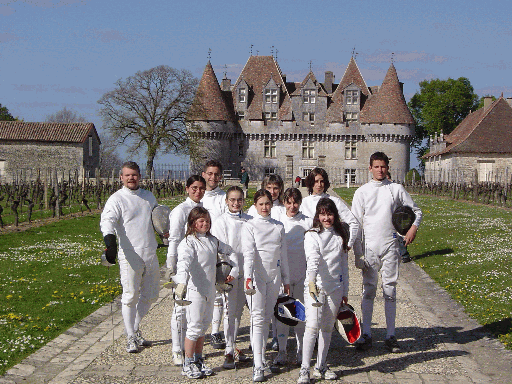
    Keeping fit and healthy in the Dordogne : From Pilates to Fencing


    If you are looking for an activity holiday or simply the most enjoyable and most efficient way to get and keep fit and healthy, there cannot be too many forms of exercise that fit the bill better than Pilates and Fencing - and especially when the instructors are as good -- and as charming as Robyn and Patrick!

    So, what exactly IS this Pilates phenomenon?

    It is an Exercise in Balance : "I must be right. Never an aspirin. Never injured a day in my life. The whole country, the whole world, should be doing my exercises. They'd be happier.", said Jo Pilates in 1965, at the age of 86.

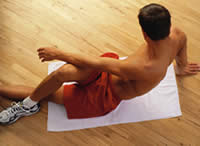
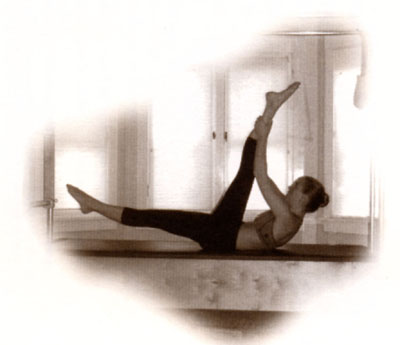
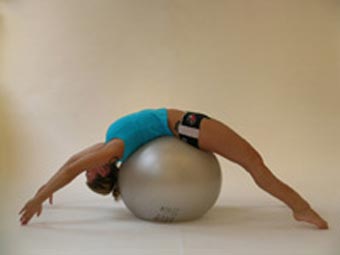
    Well, maybe not the whole world, but certainly much of it is experiencing the explosion in demand for Pilates, a method of exercise and physical movement designed to stretch, strengthen, and balance the body. With systematic practice of specific exercises coupled with focused breathing patterns, Pilates has proven itself invaluable not only as a fitness endeavour itself, but also as an important adjunct to professional sports training and physical rehabilitation of all kinds.

    Widely embraced among dancers for years, the exercises--"elephant," "swan", the language--"pull navel to spine, find the core connection! and breeaaaathe," and the look--bright-eyed, refreshed, buoyant-without-necessarily-sweating, is popping up in fitness classes, physical therapy offices, corporate retreats, luxury spas and wellness centers across the country. Another fad? A cult for the over-privileged? Think again. With the aging of our world population and the increasing trend toward mindful, moderate health practices, Pilates is more likely to find itself with a wait list at the YMCA, and in your local public schools--shaping the fitness ideals of our next generation. Practiced faithfully, Pilates yields numerous benefits. Increased lung capacity and circulation through deep, healthy breathing is a primary focus. Strength and flexibility, particularly of the abdomen and back muscles, coordination-both muscular and mental, are key components in an effective Pilates program. Posture, balance, and core strength are all heartily increased. Bone density and joint health improve, and many experience positive body awareness for the first time. Pilates teaches balance and control of the body, and that capacity spills over into other areas of one's life.

    If you are like myself - someone who hates aerobics with a passion, finds doing the circuit in gym beneficial and satisfying -- but utterly boring, but rrealises that a good form of exervice is absolutely crucial to keeping fit, supple and healthy, then look no further: the day you discover Pilates, a new world will open up for you!

    And now Pilates has come to the Dordogne as well! Robyn Haigh, from Lalinde,is a well established Pilates teacher in Lalinde as well as in Eymet and the larger Dordogne Perigord. She works both with groups and in one-on-one classes.


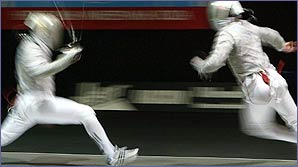
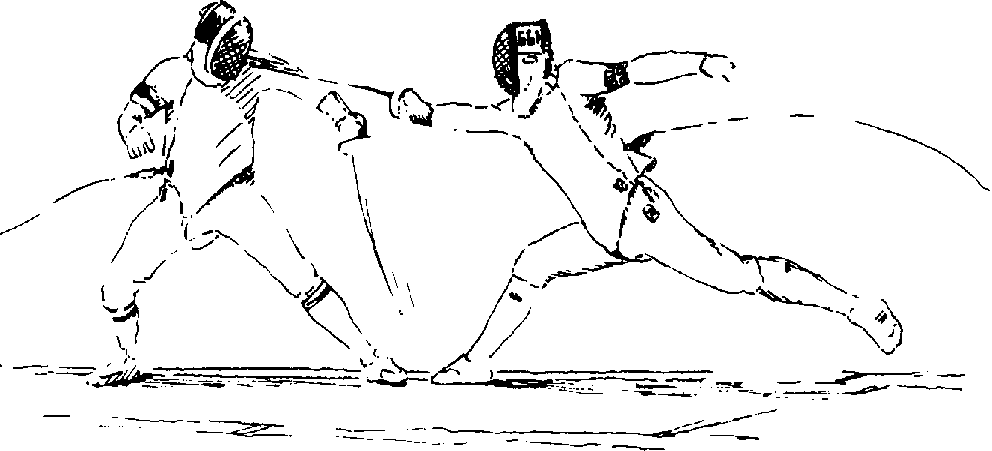
    And Fencing? Did that activity not go out with the Three Musketeers?

    No! Not at all! Fencing, or l'Escrime, became very popular again in France during the last few years -- especially after the 2004 Olympic Games when the French won the most gold medals for fencing.
    Fencing is a is a fantastic way to improve balance, co-ordination and flexibility - and it's great fun as well!

    There are three types of fencing - epee, foils and sabre.
    In all three, weapons are wired electronically to record when a hit is scored.
    In foils and epee, points can only be scored by the point of the weapon hitting. In the case of the foil, only a hit on the torso counts. In the epee, the whole body is the target. In sabre, points can also be scored by hitting the arms and head.
    As well as the three different types of sword, fencers also need protective clothing, including a wire mesh face guard.
    A metallic over jacket is also worn. This is placed over the scoring area and conducts electricity. Every time a valid hit is scored a lamp lights up on the scoring equipment.

    Fencing originated as the practice of swordsmanship to prepare men for duels and warfare. A fencing match is depicted on an Egyptian temple that dates to about 1190 B.C. and the ancient Babylonians, Greeks, Persians, and Romans all had some form of fencing. The use of armour during the Middle Ages made swordsmanship virtually obsolete. The broadsword was used against armour, but only as a crude hacking device requiring sheer strength rather than skill. By making armour obsolete, the development of firearms ironically brought swordplay back into prominence during the 15th century. Soldiers once again had to acquire some skill with the sword, and fencing also emerged as a pastime for gentlemen. Fencing masters organized guilds, which taught various moves to initiates while protecting them as trade secrets from outsiders.


    Fencing as an exercise based on speed and skill began when the longer, lighter rapier was developed in Italy during the 16th century. Because of the rapier's length, opponents had to fight at a distance and quick but controlled lunges, attacking the enemy with the point of the sword, replaced cruder hacking techniques. But the rapier wasn't a good defensive weapon, so the fencer often had to use his gauntleted left hand to parry his opponent's thrusts.

    Under Louis XIV in France, a change in fashion led to a new kind of sword. The rapier simply didn't go well with brocaded jackets, breeches, and silk stockings, so French courtiers began wearing a shorter sword. The court sword, as it was known, turned out to be an excellent weapon for fencing because it was both lighter and stronger than the rapier, so it could be used for defense as well as offense. As a result, the modern one-handed fencing technique developed, with the left hand and arm used primarily for balance.


    A special version of the court sword, the foil, was developed for practice. Meanwhile, another type of sword, the colichemarde, had been created for duelling. The blade had a triangular cross-section, with slightly concave sides to reduce weight without reducing strength. The colichemarde evolved into the modern epee.

    The third of the fencing weapons, the saber, was introduced into Europe in the late 18th century as an adaptation of the Turkish scimitar, used by the Hungarian cavalry. It was so effective that other armies began using it and another variation, the cutlass, became a standard naval weapon.

    The saber was originally a very heavy, curved sword, but a lighter, more easily wielded weapon with only a slight bend was developed in Italy late in the 19th century for duelling and fencing. The modern fencing weapon is straight, like the foil and epee, but it still has one cutting edge which can be used to make hits on an opponent.

    Fencing is one of only four sports that have been on every modern Olympic program since 1896. The Fédération Internationale d'Escrime, founded in 1913 to standardize rules, is the governing body for international fencing, including the Olympics.

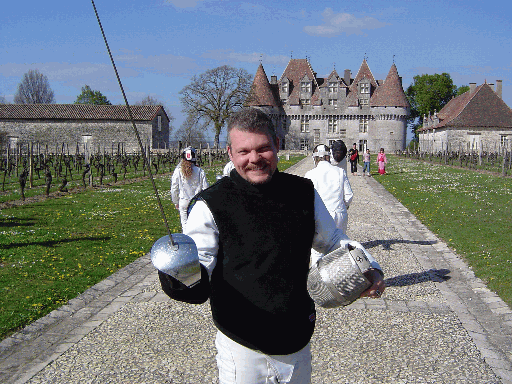
    There are fencing studios for anyone, from beginner to professional, in various centres in the Perigord -- the Cadets de Bergerac in Bergerac, of course!, with a studio in Eymet as well. To find out more and to find a class close to you, contact Patrick Wynn-Simmonds.
    Patrick is a sabreur(sabre fencer), and has received many wonderful medals and awards and acclaim at the Championnats de France and other European events.
    Last year he also became Champion d'Aquitaine (Vétéran V1 Individuelle) at Mont de Marsan at the Championnats de Ligue Vétéran, again at Epée --- and after beating the Maitre d'armes of Périgueux in the quarter finals, and his club president in the semi!


    Click on Link:
  • Fencing in Bergerac : Contact Patrick

  • Pilates Classes : Contact Robyn : 0553 633175


  • Click on Link:

  • Chateau Lalinde : The perfect venue for your event

  • Relocation Orientation in France

  • Francophiles living in France


  • Tuesday, August 21

    Food writing that leaves a bitter after taste...

    In an article he titles "When food tribes go abroad", Jay Rayner of the Observer Food Monthly, gives a somewhat bitter and twisted view of any- and everyone who ventures across the channel to come and enjoy the different lifestyle of life in La Belle France.

    He starts off well --- "Holiday eating is like holiday sex: nowhere near as exotic as you think it's going to be but just as risky. You can pick up a dose of something very nasty doing both. My parents, siblings and I still talk fondly of the violent food poisoning we acquired in some dodgy cantina on Ibiza. We were all taken out by it, one by one, within hours. Oh, how we laughed."

    He continues to make an astute remark: "These things happen, of course - but they carry such significance on holiday because our expectations are so damn high. We insist that everything be wondrously lovely and this makes us behave very oddly indeed where food is concerned. The meal at the end of a day is an expression of who we are, of how we like to imagine our true selves to be."

    But then his not-so-sub-conscious envy of all who have the good fortune to come to this part of the world to sample the gastronomic delights -- and disasters -- of a foreign and different culture, bubbles to the top and forms an unsightly and distasteful scum which completely covers any other possible tasty bits that may still have been underneath -- and as much as I tried to skim it off, hoping to reveal something that would reveal a tongue-in-cheek soupcon of dry humour, even if somewhat twisted, there was none. Just a bitter brew -- with a strong flavour of sour grapes.

    "After some rigorous research, I have been able to sort the modern British gastro-traveller into five distinct, and equally irritating, categories. And they start with ...

    1. The Dordogne Bore

    Dordogne Bores have been holidaying in crumbling gites around Bergerac for the last two decades. They insist on calling it Périgord, and throw around words like 'paysanne' and 'terroir' to bolster their foodie credentials. They also claim to have a handful of their own 'secret' little places where they go to eat; restaurants so far off the beaten track that their location is known only by 23,000 other people from Dorking, Guildford and Cheltenham.

    What the DB will never recognise is that every single restaurant in the region serves exactly the same bloody food: duck confit, foie gras, more duck confit, herb omelettes, duck confit and more duck bloody confit. What's more, 85 per cent of the restaurants will serve mediocre versions of these dishes, though the DB will either not notice or not acknowledge this. Usually this is because they are plastered on cheap wine, arguing that you don't have to spend big money 'down here' to get good wine. This, too, is nonsense. No matter; they will praise the 'civilised' French attitude to drinking, while failing to recognise that France has one of the highest rates of alcohol-induced liver disease in Europe.
    Most likely to be found in: the Dordogne, natch; the Lot and Garonne; Tuscany.

    2. The Authenticity Addicts

    The AA is convinced that only by eating exactly what the locals eat can they really connect with the culture they are visiting. This means they end up consuming some of the nastiest food items ever devised, though they will always claim to really, really like them: stews made from goat intestines; braised cow's udder; pressed pig's ear in vinegar. What the AA fails to recognise is that renowned local dishes like these are almost always the product of poverty, and therefore generally more a matter of necessity than tastiness.
    Most likely to be found in: India; China; Thailand; and the more wretched, typhus-sodden corners of the former Soviet Union.

    3. The Anything-with-a-View Crew

    Everybody knows that the worst restaurants in any fishing town are the ones right on the water, where the smell of food is undercut by the foul stench of the stagnant sea-bilge lip-lapping at the harbourside. The owners of these prime pitches know that the punters will come solely for the location, so they don't have to worry about the quality of the food, plus they can also charge the suckers roughly double what those places a street back are charging.

    The AWAVC will happily leave the beach at five in the afternoon to drive two hours into the mountains to this 'fabulous little bistro with the most fantastic view of the sunset', forgetting that, after the first half hour, the sun will have indeed set and that they will then be eating their mediocre dinner in total darkness.
    Most likely to be found in: the Greek islands; Provence; Sardinia.

    4. The Gastro Tourist

    The GT regards a holiday as an eating opportunity, and time spent on the beach between lunch and dinner as an irritating distraction. The GT needs only one holiday read - the Michelin Guide, and will tick off restaurants as they go. But few of the meals they pay astronomical sums for will meet with their approval, as the GT has shockingly high standards and cannot be conned by gastronomic smoke and mirrors.
    Most likely to be found in: Burgundy; around Lyon; northern Spain near San Sebastian; Catalonia.

    5. The Market Kings

    Market Kings stay in villas or gites and never eat out because, as they insist, loudly and often, 'really, why would you when the produce in the markets here is so fabulous, I mean look at the tomatoes nothing like the flavourless rubbish you get back home and the peppers are so sweet you could eat them for dessert. Here try some of the bread - it's made by a local man who's 103, blind, incontinent and crippled by arthritis but he's still got the touch ...'
    The MK gets up every morning at six to go to the local village to buy their produce (even though exactly the same stuff is available at half the price at Carrefour nearby).
    Most likely to be found in: Tuscany; Dordogne; Provence."


    The Observer Food Monthly would do well to send Mr Rayner on one of our excellent Relocation Orientation courses at the Chateau Lalinde before allowing him to write another article about something he knows so little about or on which he holds such prejudiced -- or should I say, 'jaundiced' views; and Jay Rayner would do well to forget about the frissons of 'risky sex' in Ibiza and rather come enjoy a heavenly few days in -- yes! the Périgord, also known as the Dordogne, and soon officially to be known as Dordogne Périgord -- where we will initiate him into the true pleasures of life -- which I can guarantee will exclude anything boring, but include a fair few pleasurable hours of fine dining with interesting people and stimulating conversation.


    POST SCRIPT: See Jay Rayner's response in comments below.

    Click on Link:

  • Chateau Lalinde : The perfect venue for your event

  • Relocation Orientation in France


  • Tuesday, August 14

    The Orpheus and Bacchus Music and Wine Festival, St Emilion and Bordeaux


    Travel Video and TV News report:

    Music and Markets Offers Sumptuous Bordeaux Fall Getaway

    Fall into the ultimate French getaway – luxuriating in Bordeaux’s renowned wine country and imbibing inimitable wine, food, music and guests on this, their most splendid tour, a sumptuous autumn escape to Bordeaux. This week-long getaway includes a rejuvenating grape-treatment spa, delectable haute cuisine, world-class wines (of course!), and best of all, mingling with internationally recognized musicians throughout the day before hearing them perform in an intimate soirée setting.

    Throughout the week, guests will indulge in a lavish menu of cultural and gastronomic pleasures. The first night is spent delightfully decompressing amid the vineyards of the Château Smith Haut Lafitte at the Sources de Caudalie Hotel and spa.

    The next day, guests can relax and refresh during a morning of pampering at the renowned Caudalie Vinotherapie Spa, before departing for St. Emilion, a medieval village set above the Dordogne River valley and surrounded by chateaux and vineyards. Postcard perfection awaits as guests can stroll the cobblestone streets, enjoy an aromatic pause at a patisserie, tuck into a boutique or two, and select a bottle of wine at a town vintner. Then in the evening, epicurean delights await during dinner at a former Cardinal’s palace, now a gracious hotel and restaurant inside the ramparts of the historic village, a Unesco World Heritage site.

    For the next four days, as part of the Orpheus and Bacchus Music and Wine Festival, guests will continue to discover the lush beauty and culinary riches of the region, following the route du vin through the oft-toasted vineyards of Bordeaux at harvest time, and can either test their culinary prowess during a hands-on cooking class with Chef Georges, sniff, swish and swirl at a wine-tasting class with a Master of Wine, or just absorb the distinct pleasures of the treasure-filled villages of the region. Other activities include an insider’s visit to a winery that will allow guests to learn about the intricacies of quality wine making, and purchase, if they’d like, wines direct from the viticulteur.

    It is the evening entertainment; however, that sets this Bordeaux getaway apart from all others. In the midst of stellar vineyards is the home of the Orpheus and Bacchus Music and Wine Festival, owned and organized by Ian Christians. Here guests will enjoy his bubbly house party with world-class musicians and fellow music lovers, sharing many a bon soir mingling with other guests, savoring hors d’oeuvres and aperitifs before stepping into the salon, La Musique, where artists introduce the works they’ve prepared for the evening. The grand venue, originally designed in the 1700s as a celebration hall for the vendage, boasts wonderful oak beams, stone-arched windows, and a splendid Steinway, owned previously by renowned pianist Alfred Brendel.

    The artistry continues, as Chef Georges Gotrand presents his culinary masterpieces at a candlelit dinner table. Georges introduces each evening’s palate-pleasing menu, and the resident Master of Wine provides expert commentary about the wines and the rationale for the pairings. After the main course, guests return to the salon for a shorter, less formal concert before completing the evening with an abundant array of cheeses, as well as dessert and coffee.

    This captivating combination of fine food and wine, marvelous music, and plenty of pampering – all in a lush French countryside setting – begins October 5 and is priced at $4450 per person. Each Music and Markets tour is limited to no more than 10 people, allowing each participant to receive personal service and attention that’s often unavailable on other tour packages.

    For more information about the Music and Markets in Bordeaux tour, or any other
    Music and Markets offering, contact us here.

    Related articles:
    Bordeaux
    Canadian Resort near St Emilion
    Bordeaux
    Tourism and Porperty in France
    Wine tasting weekends in Bordaux


    Click on Link:

  • Chateau Lalinde : The perfect venue for your event

  • Relocation Orientation in France


  • Monday, June 11

    Bordeaux : A Feast for the body and soul

    Bordeaux : Centre of Wine, Food, the Arts and Shopping -- A Culture Vulture's paradise!
    As Alain Juppe, the Mayor of Bordeaux says:
    The world capital of wine, famous for its excellent lifestyle, Bordeaux also features some of Europe's most charming and impressive examples of 18th century architecture.
    Located in the heart of a region offering countless attractions, Bordeaux combines celebration, great wines, and first class cuisine.


    The excellent public transport makes getting around so easy -- the tram system introduced a few years ago has revolutionised Bordeaux and probably made it one of the visitor-friendliest cities in the world. The trams are convenient and quick and excellent value. There are many underground parking garages all over the city and finding ones way into the city is made easy with many clear signs indicating where the different areas and the different parking garages are.


    The Quartiers of Bordeaux:
    The Triangle
    The triangle is formed by the Allees de Tourney, Cours Georges Clemenceau and Cours de l'Intendence. This is the city's heart where every kind of shop, every type of restaurant, and every class of hotel can be found to suit every person's taste.

    Rue St Catherine
    Stretching from the aristocratic Place de la Comedie to the student district at Place de la Victoire, it is the longest pedestrian-only street in Europe. It is lined with many of France's best known retail outlets -- and it is crossed by the other very interesting pedestrian streets such as Rue de la Porte Dijeaux, as well as the bigger arterials such as Rue Alsace Lorraine and Cours Victor Hugo. A giant open air shopper's paradise!


    Quartier Saint-Pierre
    The Saint-Pierre district is a maze of cobble stoned streets and alleys amongst the beautiful stone buildings of Bordeaux -- many of which are craftsmen’s and artist's studios and galleries. The district also features avant-garde showrooms - and some of the most spectacular examples of the massive restoration project which the entire Bordeaux is undergoing. Saint-Pierre's many little squares tucked away amongst the buildings offer outdoor restaurants and cafes and wherever you decide to sit and enjoy a meal or a glass of wine, you will also have a lovely - and often entertaining view of your surroundings.

    Quartier St Michel
    This has always been a district where beautiful antiques and unusual second-hand items can be found. There is a flea market as well as a second-hand and bric-a-brac gallery, and a colourful variety of Mediterranean and especially Moroccan grocery shops and bazaars -- with a feast of colour and smell and sound. People who enjoy hunting for good deals will just love this area, which is also much appreciated by students - and tourists in the know.

    Les Chartrons
    This is a virtually self-sufficient district with a village atmosphere and plenty of quality boutiques. The district includes Rue Notre Dame, a street full of antique dealers, second-hand shops and art galleries, as well as Rue du Faubourg des Arts which has recently become the area for serious artists and designers. Les Chartrons is reputedly the developing 'in' place to be in Bordeaux and there are still some interestingly-priced properties to be had for the prospective buyer, but you will have to be quick, as the prices are going up as we speak.


    When you wander through the market, you may see a table with a hot plate and a large pot of soup simmering........ Bring a vegetable, take a seat in the shade under one of the lovely trees, peel your vegetable and then give it to the man with the bright floral apron. While he is cutting up your vegetable into the soup pot, you can enter a small cubicle and listen to someone tell you a fascinating little two minutes story............. And comes lunch time, return to the table under the trees and the man in the apron will give you a delicious cup of the 'composed' soup! ----What a lovely way to spend a Saturday morning!


    On the river there may be a cruise liner from some exotic shores that is in port for the night, or there may be a opera costume festival where you can try on well know opera figures' costumes, or an interesting exhibition in the Aquitaine Museum, or street musicians performing for passers-by - for the pure pleasure of it, or perhaps a slightly more formal dinner and music recital in Cafe Louis adjacent to the Opera House... always something going on and always something for everyone's taste....

    Related Links:
    Bordeaux: Renaissance of a City
    Morocco comes to Bordeaux
    Wine Tasting in Bordeaux

    Click on Link:

  • Chateau Lalinde : The perfect venue for your event

  • Relocation Orientation in France


  • Monday, June 4

    Japanese Manga comic boosts Dordogne wine sales


    "Taste of heaven: Manga spreads 'Drops of God' in Asia" reports Sophie Hardach in Reuters today.

    Apparently "Wine reviews with a twist are a speciality of "Kami no Shizuku" ("The Drops of God"), a manga comic series that has taken Japan by storm, is conquering Korea and China and has boosted European wine sales along the way.
    Written by a brother-and-sister duo of wine enthusiasts, the manga comic combines a mystery plot with a playful introduction to European wines. Think "The Da Vinci Code" set in a Tokyo bar.

    "The minute it was translated into Korean, we had calls from three importers," said Basaline Granger Despagne, whose family has grown wine near France's Dordogne river for 250 years. Their Chateau Mont Perat 2001 Bordeaux appears early on in the manga. With this sudden interest, the producers are getting calls from all over for shipments of wine. Basaline Granger Despagne said her family had been approached by distributors in mainland China but had so far found no one they felt comfortable selling their wine to.


    "When it was translated into Chinese, people called us from Taiwan saying, 'I bought some Mont Perat and sold 50 cases in two days because of the manga'," she said in a phone interview. In Korea, businessmen drop names from the serialised book into chats with reporters and shops display "Drops of God" signs.

    Wine industry experts believe part of the manga's appeal is that it teaches readers enough about wine to understand the drink and impress their friends, but does so in an entertaining way. The main character of the manga, a young man called Shizuku Kanzaki, discovers the beauty of wine after his father, a famous wine critic, dies and leaves an unusual will: a description of 12 wines he considers to be the best in the world, comparing them to Jesus Christ's disciples. The first person to find these "disciples" will inherit the father's wine collection, a contest that pits Shizuku against his adoptive brother, Issey Tomine, who works as a sommelier."

    The authors say the manga is not sponsored by anyone and they choose the wines based on their own independent research, including trips abroad and tastings.

    Japan probably has the most developed wine scene in the Asia. At a recent wine tasting in Tokyo's Grand Hyatt hotel, row after row of Japanese wine lovers were expertly slurping, spitting and taking notes as German sommelier Markus Del Monego explained what they were drinking.

    Early next year, "The Drops of God" will be published in French, possibly followed by Italian. The original book series is expected to continue for another five years or so, and there is talk of a film.


    © Reuters 2007. All Rights Reserved.

    Related post:
    Asterix vs Manga : Japanese comics conquer the hearts of France

    Click on Link:

  • Chateau Lalinde : The perfect venue for your event
  • Relocation Orientation in France


  • Related Posts Plugin for WordPress, Blogger...