Wednesday, June 21

News from the Dordogne

Antony Mair from the Frenchentree site gives us some local news items from the Dordogne press:

Dordogne ladies move into the underwear market

The entrepreneurial spirit clearly lives in Nontron, where Shirene Pickering and Sue Stagg have set up a mail order business specialising in brassières for the larger woman. Having had difficulty in finding appropriate bras for themselves, Shirene and Sue felt they needed to come to the aid of other women whom nature had generously endowed. "80% of women are wearing bras that aren't right," Sue says. "And most of them don't even know!"
They launched their new business at the beginning of May, with a well-designed website entirely in French. This is no expat venture for the British ghetto in France, but a proper business aimed at the French market. The company name, Soutifaction, is a clever play on words, combining the first part of "Soutien-gorge" with the second part of "Satisfaction". Their website is well designed and user-friendly. The orders have begun to come in already. Shirene and Sue hope to be able to take on a small number of staff in due course.
We all wish them every success!

Josephine Baker honoured

June 3 marked the centenary of the birth of Josephine Baker , former chatelaine of Milandes. The event has been commemorated with a new sculpture of this famous local personality opposite the children's home at Castelnaud-la-Chapelle. Shown embracing a child, the black American who was finally given a state funeral in Paris is remembered not only for her glamorous showbusiness life but, more lastingly, for her work with children and the adoption of the "Rainbow Tribe".

More pigeons destroyed

Mussidan has followed the example of some of the other Dordogne towns in organising a reduction in the pigeon population. Local marksmen were brought in to shoot as many as possible, while there was also a campaign to remove the birds' nests. 521 pigeons were shot, in the course of three sessions. This is unlikely to have a permanent effect, but should provide a temporary respite from the mess and inconvenience caused by our feathered friends.
(My question has to be why do people not continue to build architecturally interesting and esthetically beautiful little pigeonniers for the much maligned birds, harvest the guano - as had been done for hundreds of years, and use the natural fertilizer in the fields, and all can live in harmony once again?......--WW)

More flights into Bergerac

Bergerac airport continues to expand, with Flybe now running flights to Leeds (once a week) and Exeter (five times a week). This brings the total number of UK destinations to eight – the other six being London Stansted, Bristol, Southampton, Birmingham, Liverpool and Nottingham East Midlands. However, the airport's future is still uncertain, and is becoming something of a political football between the ancient rivals of Bergerac and Dordogne capital Périgueux. The latter has its own airport, Bassillac, which has gradually foundered, while Bergerac's upstart, Roumanière, has gone from strength to strength. However, the volume of traffic at Bergerac is highlighting the airport's shortcomings – a grassy field for carparking, inadequate departure lounges and a tent for an arrivals hall. Fine for a makeshift effort, but probably not good enough for the 350,000 passengers a year now coming through.

Sarlat's restaurateurs band together

Following a damning review of the eating facilities in Sarlat in France's wellknown tourist guide "Le Routard", the town's restaurateurs have formed an association and established a quality code. Members of the association are required to use fresh ingredients and to have been established for more than two years. One restaurateur was refused membership when he said he could not take on any trainees.
It's going to be difficult for the new association to improve quality while avoiding unfair competition and discrimination. In a town where everyone knows everyone else, allegations of unfairness are likely to surface rapidly. Travel to Sarlat and sample the results yourselves!

Profile of the typical Dordogne tourist

A survey has recently highlighted marked differences in approach between members of different nationalities visiting the Dordogne. The British are apparently noted for their fondness for guided tours, whatever the weather, as well as for their fondness for golf. The Germans head for churches and abbeys. Italians, who come principally in August, enjoy château life and the local cuisine. Spaniards, on the other hand, are visitors throughout the year, and immediately seek out the Vesunna museum in Périgueux, whose architect, Jean Nouvel, is a well-known French figure in Spain. Dutch and Belgians resume their native cycling habits and get on their bicycles to explore the countryside.


Click on Link:
  • Events


  • Saturday, June 3

    Be back soon!


    Well -- in the morning I am getting onto the back of a motorbike and setting off for the land of the bulls, the matadors, the torreadors, the passion, the blood in the sand, the flamenco and the castanettes, Gaudi, Dali and dust, siestas and fiestas!
    Hasta pronto, mis amigos!


    Click on Link:

  • Chateau Lalinde : The perfect venue for your event


  • TAGS:


    Friday, June 2

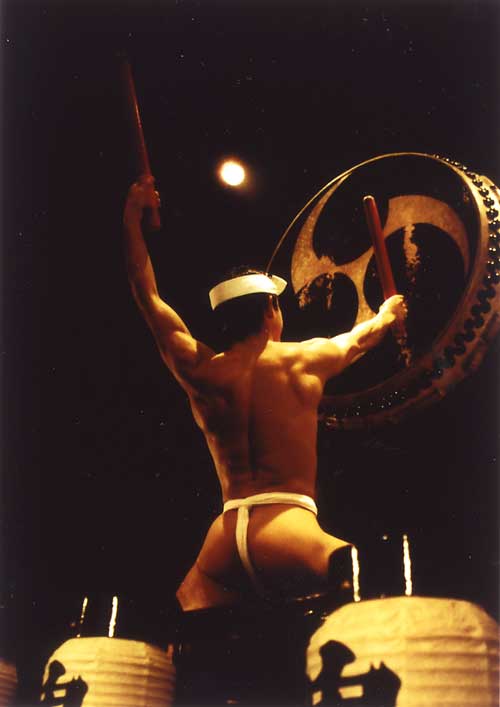
    A special Event in a Special Place : The Taiko Drummers in Fes

    I happened to notice that tomorrow, on Sunday 4 June, the Za Ondekosa Taiko Drummers from Tokyo are performing at the Batha Museum in Fes -- for the famous annual Fes Festival of Sacred Music
    Now why would that interest me, you may well ask? For three reasons:

    The first time I saw the Za Ondekosa, was during a visit to Japan where I attended a conference. Watching these people perform was one of the most moving and exciting experiences of my life. Man and drum become one instrument. Their motto, "running, drumming and dancing on the earth," is not just a slogan but a way of life. Founded in 1969 by director Tagayasu Den on Sado Island, Japan, the group lives together, trains together and has created world-renowned shows using their taiko drums --- these are huge big drums -- in fact taiko means big in Japanese.

    This specific group, the Za Ondekoza, is one of the best drumming troupes on earth.
    They made their debut 1975, after years of practicing and defining their mission, when they jumped on stage to drum straight after running the Boston Marathon. After several more years, they decided to weave running and performance into the medium they have created: the marathon tour and since they have been drumming and running marathons in equeal measure. Not surprising really, as when you watch them perform you realise they must be super fit and very strong.

    Za Ondekoza's first marathon tour started at Carnegie Hall, New York, in 1990 and ended there three years later, after 355 performances, 1,071 days, and 14,910km of running. Their first marathon tour in Japan was held after the death of founder Tagayasu Den in 2001. His pupils ran 600km from Sado Island to Fuji, near where the group is now based.

    The next running tour planned is Long Journey, a trip of 12,500km in China, which will hopefully be completed by the 2008 Olympics in Beijing.

    Za Ondekoza also performed at the opening ceremony of the Paralympics in Nagano in 1998 and in an unprecedented collaboration with the fashion industry at the Christian Dior fashion show three years ago, when their sounds were combined with those of DJ Jeremy Healy. They have collaborated with many other groups, including the Boston Symphony Orchestra.

    The sounds, motions and treks of Za Ondekoza may turn heads but its their silences and stillness that make them so captivating and popular. In Japanese, the word for such silence or space is ma, and in taiko drumming the word describes the period between drum hits.

    Ma heightens the drama of the beats in the same way that the stillnesses of the performers accentuates their physical aptitudes. Ma, the silence or stillness, is where the bodies of the performers and the drums serve the same purpose and find common ground.

    Ma is often inspiration for thematic rhythms, such as in oroshi, when hits on the taiko are at first spread apart but gradually are played closer together until ma is minimized in a fast roll that creates seemingly constant noise.


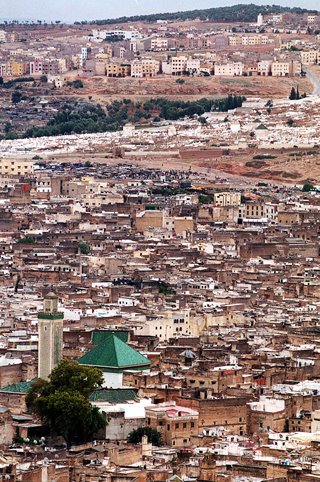
    The second reason this little news item caught my attention, was because it was about the Fes Music Festival. I have never attended the music festival, but have visited Fes and absilutely fell in love with the city and its beautiful medina.
    And one of the place that really stole my heart, was the Musée du Batha in Fès -- the third reason why this event tomorrow was of such interest for me.
    This beautiful building Le Musée du Batha à Fès is situated close to the lovely Boujloud gate -- the blue gate. It was built at the end of the last century (which in my mind is still meaning the end of the next to last century -- in 1873-1894) by the then sultan Moulay Hassan I and was where royal audiences were held during summer. The building was completed by his son and successor Moulay Abdelaziz around 1908.
    (Photograph by Suzanna Clarke)

    Already as early as 1915 the palace was converted into a museum. the Spanish-Moorish architecture and the large central courtyard where a tree stands that still appears in my dreams, it was that impressive -- I seem to remember that it was a Juniper tree -- form the perfect backdrop to the beautiful plaster and woodwork, carpets, embrouderies, jewelry, the zellige tile examples, an iron forge and of course the magnificent Fes Blue ceramics. It is no doubt one of the museums I have most enjoyed spending time in. Almost every exhibit took my breath away. -- It is wonderful!
    Apparently the current exhibit there "The Magic of the Earth", is well worth a visit.


    Click on Link:

  • Chateau Lalinde : The perfect venue for your event


  • TAGS:


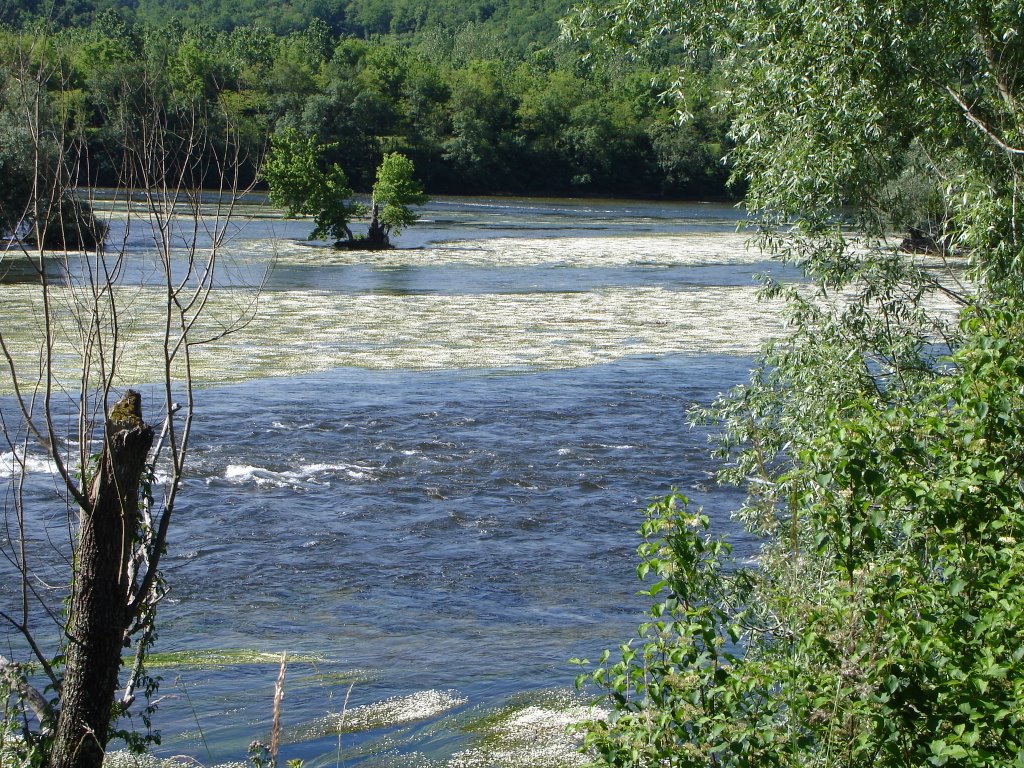
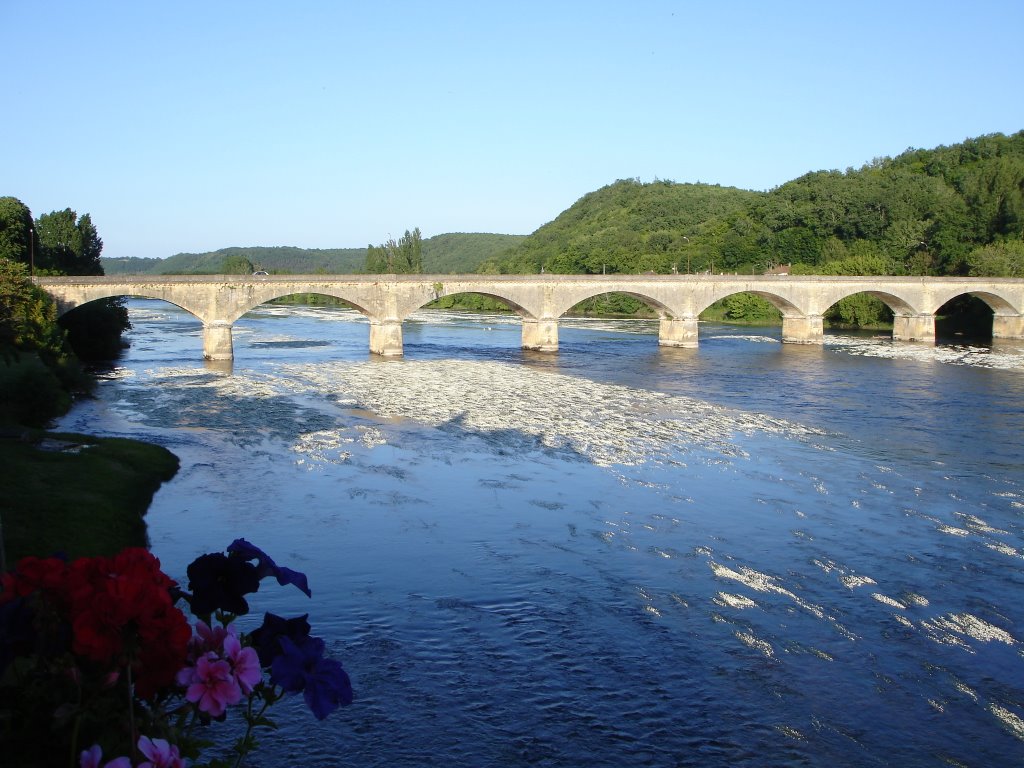
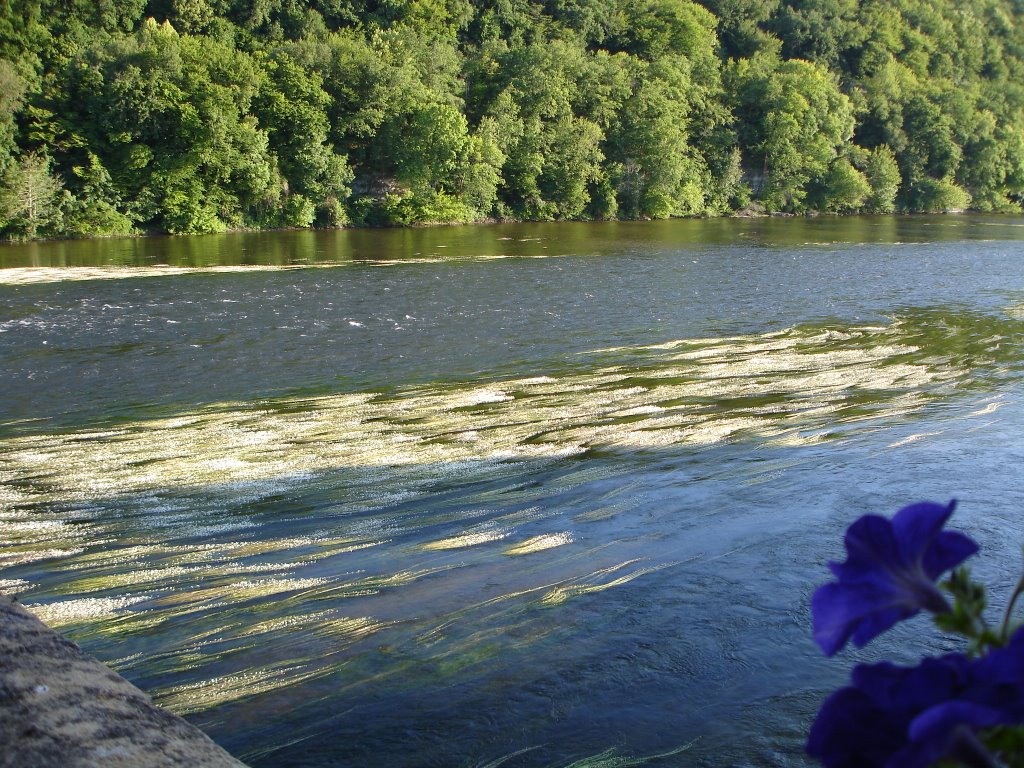
    At last: the riddle of the Flowering Dordogne River is solved!

    For the last two weeks, ever since the level of the river has fallen right down, and the moment the long grass-like underwater plants were exposed and started sprouting a million little white flowers, I have been trying to find out what this amazing plant was called. I have had every kind of intelligent answer -- the most popular being "water flowers" and "flowering algae", but it was a marvellous chance encounter with Maureen, a botanist travelling through (a story for another time!) that revealed the answer. "Look up crows foot under the renunculus family", she said, and Voila! the answer to the riddle of the "water flowers" on the Dordogne!


    Flore laurentienne
    Frère Marie-Victorin (1885-1944)
    Ranunculus :

    [ Index ] [ Clef des espèces ] [ longirostris ] [ trichophyllus ] [ cymbalaria ] [ flabellaris ] [ gmelini ] [ reptans ] [ abortivus ] [ sceleratus ] [ recurvatus ] [ septentrionalis ] [ repens ] [ acris ] [ pensylvanicus ] [ ficaria ]


    Famille 33. ― RANUNCULACEAE [ RENONCULACÉES ].

    4. Ranunculus Linné. — Renoncule.

    1. Ranunculus longirostris Godron. — Renoncule à long bec. — (Long-beaked water-crowfoot).

    — Plante strictement aquatique ; feuilles divisées en segments filiformes (longueur généralement moins de 25 cm), assez rigides pour se soutenir hors de l'eau, étalées presque à angle droit avec la tige, sessiles ou presque ; fleurs blanches ; fruit muni d'un bec défini d'environ 1 mm. Floraison estivale. Rivières et lacs. Ouest du Québec.

    Ranunculus longirostris, fruit.
    Flore laurentienne, figure 55, dessin frère Alexandre Blouin.


    Cette plante, ainsi que le R. trichophyllus, appartient à un groupe de renoncules très polymorphe et très mal compris, qui est parfois séparé du genre Ranunculus (genre Batrachium).


    Click on Link:

  • Chateau Lalinde : The perfect venue for your event


  • TAGS:


    Related Posts Plugin for WordPress, Blogger...