Monday, January 30

NEWS! NEWS! NEWS!


Come take a glimpse of the new chateau website, and watch as we add the final finishing touches and photographs over the next few weeks!..........

Click on Link:
  • Chateau Lalinde : The perfect venue for your event


  • TAGS:

    Hugeunot evening sold out!

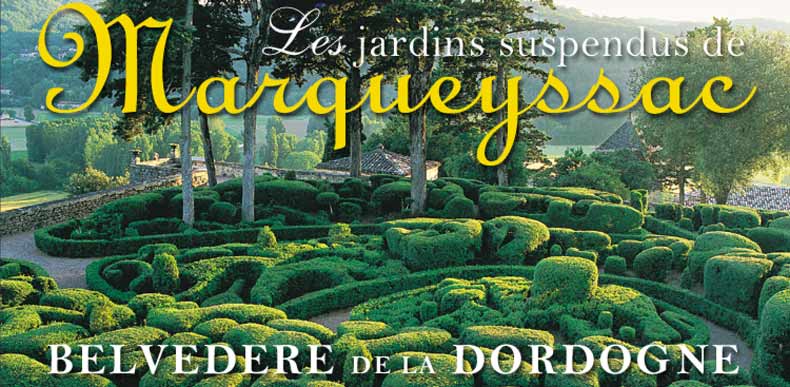
    We regret that we have had to turn away so many from the talk on the Huguenots on Thursday 2 February, but suggest that you secure your tickets for the next lecture, on 16 March, on the gardens of Marqueyssac right now to avoid disappointment.

    Conférence : « Marqueyssac forever »
    Jeudi 16 mars à 18h30 au Château Lalinde avec Stéphanie Angleys, guide des Jardins à Marqueyssac. Participation 5€


    Coupon de réservation : Prière de réserver et de renvoyer avec votre paiement chèque à l’ordre de Aquitaine Langues.

    Nom ………………………………….............…. Prénom …………………………........................

    Adresse …………………………………………………………………………….................................

    Ville…………….............………………………. Code postal ………………………...........................

    Courriel (email) ……………………………………………………………………................................

    Je voudrais réserver ………. place(s) pour la Conférence « Marqueyssac »

    Total ………. place(s) et …………….….. € (euros)


    Signature ……………....……………………...... Date ……………………………............................

    Please Note:
    Due to the tremendous response, this talk will now be held at the much larger venue at the Marqueyssac Gardens and not at the Chateau Lalinde. The above form can still be used, but book your place without delay!


    TAGS:


    The Great Escape


    The local excitement this week, apart from the heavy snowfall, is the escaped convict on the loose!
    Two young prisoners escaped from the local detention centre in Mausac. One was soon caught and safely locked up again, but the second is still out there somewhere.
    Speaking to the locals, however, it is doubtful that the young man would be freezing somewhere in the woods. It is much more likely that a farmer or a vintner or a good family lindoise have taken him in and are having him sit around their fire in their kitchen sharing a pot of mulled wine and a big bowl of vegetable soup.....

    Update The latest news is that the young man, Gilberto Oliveira, (27) has been apprehended and is safe and warm back in prison, regaling his fellow convicts with stories of his few days of freedom and life outside the high walls......... And probably secretly regretting his bold move, as he will most certainly be moved to a much higher secrutiy prison in the near future

    An exceptional winter wonderland

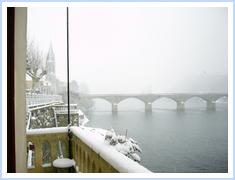
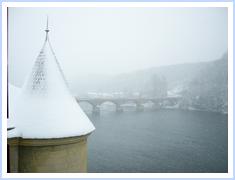
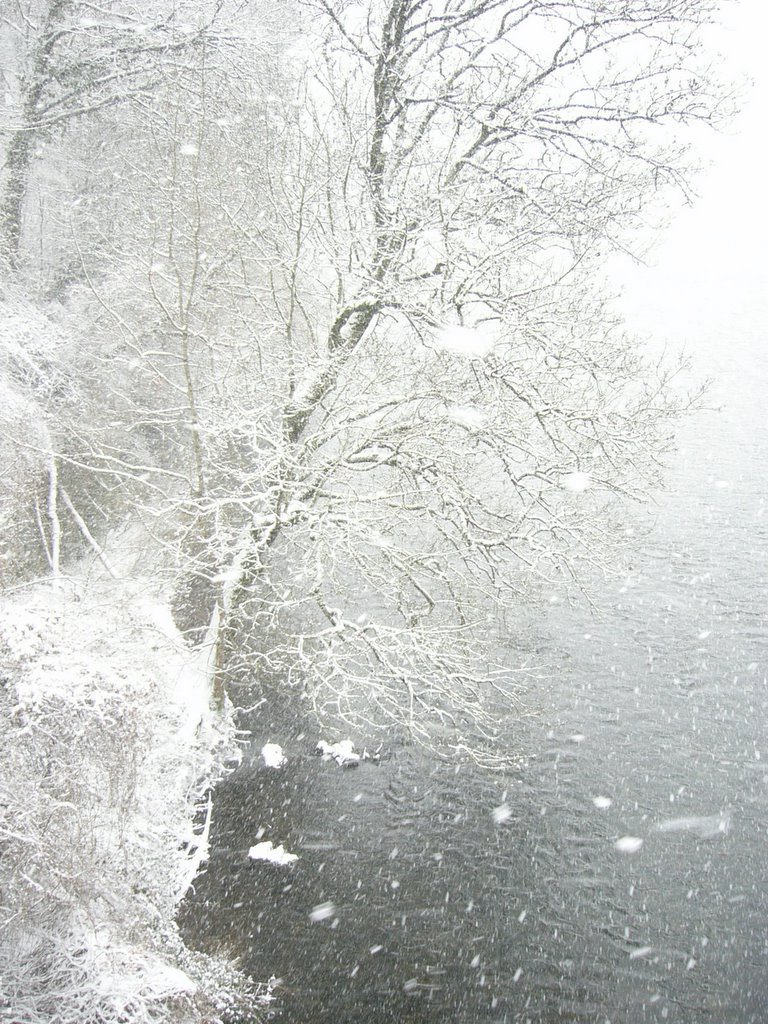
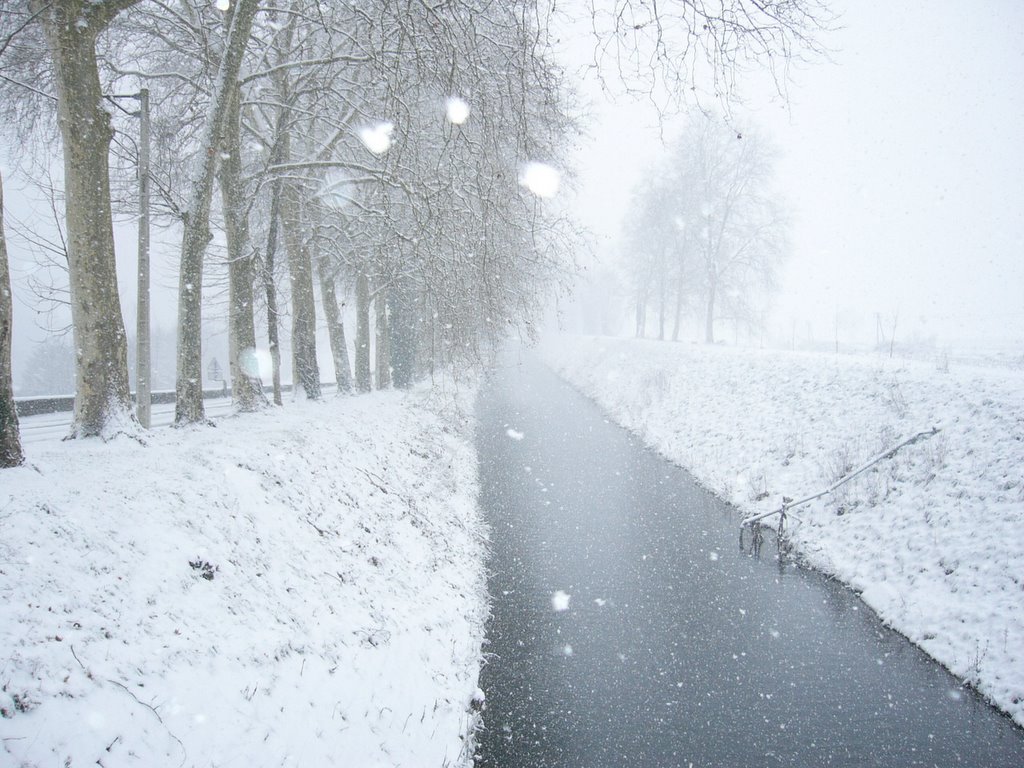
    Apparently, according to the local records, this wintry weather does not happen more than about once in a decade. Twelve inches of snow in 36 hours! And the countryside and villages are transformed into a picture book scene. Although picturesque and exciting for a newcomer to the area, snow in these areas can be very disrupting -- few people have vehicles equipped with snow tyres or chains and as harldy anyone in these usually warmer climes are accustomed to driving on snow covered or icy roads, the world around us came to a virtual halt. ....But I never heard a single soul complain about that and most of us were out there with our cameras and walking boots and enjoying the glacial beauty of a countryside clad in white.


    TAGS:


    Sunday, December 11

    Throw-away Boats : The Gabares of the Dordogne

    With thanks to Mike K-H --

    Until I started exploring this region, I believed that ‘use it once, then throw it away’ was one of those dubious inventions of the twentieth century.

    Wrong. For hundreds of years, ending around 1930, the ‘gabariers’ of the Dordogne have been building boats about 18 metres long and 4 metres wide, taking them on a hairy six-day trip from the upper reaches of the river right down to Bordeaux - and then breaking them up and selling them for firewood. They used to build and throw away about three hundred gabares each year!

    Once you know the whole story, it makes sense. On the upper reaches of the river, the villagers spent the winter as lumberjacks, felling oaks and chestnuts and floating the logs down to the navigable section below Bort-les-Orgues. There, they were split into planks, beams, staves for making wine casks - and skinny leftovers destined to become beanpoles or structures for training grape vines. The less valuable timber was shaped, steamed and fastened into crude flat-bottomed wooden freight carriers, the ‘gabares’. They were caulked with oakum or moss, so the crew spent a lot of time bailing water out of these leaky craft.

    Smaller, longer-lived boats were also built in the Limousin region. The commonest of these were the ‘gabarot’ (8 to 12 metres long) used for carrying cattle and small freight, the ‘batelet’, a 5 to 7 metre fishing boat, and the ‘nau’, a ferry. (The hamlet called Nauzenac, once a centre for construction of gabares, gets its name from this).

    The gabares of the Dordogne were steered with a long pole with a small vane fixed to the end. The hinge was simple: the pole was lashed to a peg sticking up from the timber knee which reinforced the pointed stern of the boat. They were rowed with two ‘palas’ (plain poles five or six metres long) and fended off the banks and riverside trees with a ‘haste’ which was sometimes used as a quant pole, Norfolk Broads-style. On slower rivers like the Loire, gabares carried a mast and a simple square sail.

    To reduce the hazards caused by rocks and rapids, the gabariers waited until the waters showed 1.5 metres deep at the marker in Argentat port – which typically happened for about thirty days each year. As the time approached, the gabares were built, and each was loaded with fifteen to twenty tons of the produce of the Limousin and Auvergne regions – anything from cheeses to coal.

    The gabariers were a noisy, cheerful gang, whose confidence in their skills made them seem wild and reckless to ordinary folk. In their six-day voyage they had to navigate no less than twenty-five dangerous sections known as ‘malpas’. For any of you who have been whitewater rafting,just think what it would be like steering a twenty-ton wooden lighter with nothing but a long pole lashed to a peg! Small wonder that the eighteenth century French Navy recruited them as pilots for reef-strewn coasts.

    The gabares met their demise with the arrival of trains, road haulage and the construction of dams on the Dordogne, but you can now travel in powered imitations of these vessels through the calm, heavily-wooded upper reaches of the Dordogne. If you want to try it, contact ‘La Dordogne en Gabare’ at Marcillac-la-Croisille, a few kilometres east of Tulle. Their telephone number is (+33) 5.55.27.68.05, FAX is (+33) 55.27.68.05 and their web site at fromagerie albaret . They only operate during a short summer period when the waters in the dams are high.
    Related Posts Plugin for WordPress, Blogger...